Celebrating two World Heritage sites through ‘Salt and Stone’
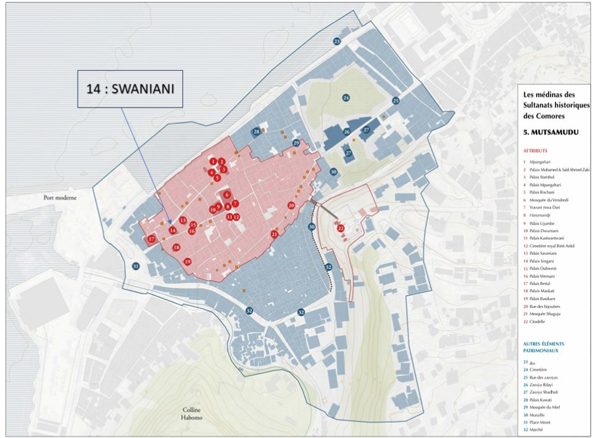
In July this year, we were delighted to hear that the medinas of the Comoros were inscribed on the UNESCO World Heritage List. This is fantastic news for everyone involved in protecting and celebrating Comorian heritage, and it also marks an exciting milestone for the ‘Salt and Stone’ project. Swaniani Princely House, one of the project’s two focus sites, sits within the historic medina of Mutsamudu on the island of Anjouan, meaning that ‘Salt and Stone’ is now working across two UNESCO World Heritage sites: the medina of Mutsamudu and Stone Town of Zanzibar.
Although they are in different countries, these two historic towns share remarkable similarities. Both have been shaped by centuries of Indian Ocean trade, both are built using traditional coral stone, and both face the challenge of protecting their historic buildings while remaining vibrant places where people live, work and worship. With ‘Salt and Stone’ now spanning two UNESCO World Heritage sites, it feels like the perfect opportunity to explore what these places have in common, what makes them different, and why those connections matter.
Five things Stone Town and Mutsamudu have in common
1. Both are living Swahili trading towns
At first glance, Stone Town and Mutsamudu may appear quite different, but both are products of the same rich Swahili trading tradition that flourished across the Indian Ocean for centuries. Merchants, sailors and travellers from Africa, Arabia, Persia and India exchanged not only goods, but also ideas, languages, architecture and customs, creating the distinctive Swahili culture that still defines both places today.
Importantly, neither town is simply a collection of historic buildings. They are living heritage sites where people continue to live, work, worship and celebrate community life. This is reflected in the two buildings at the heart of ‘Salt and Stone’: the Ba’mnara Mosque in Stone Town remains a place of worship and community life, while Swaniani Princely House in Mutsamudu reflects the medina’s political, domestic and social history.
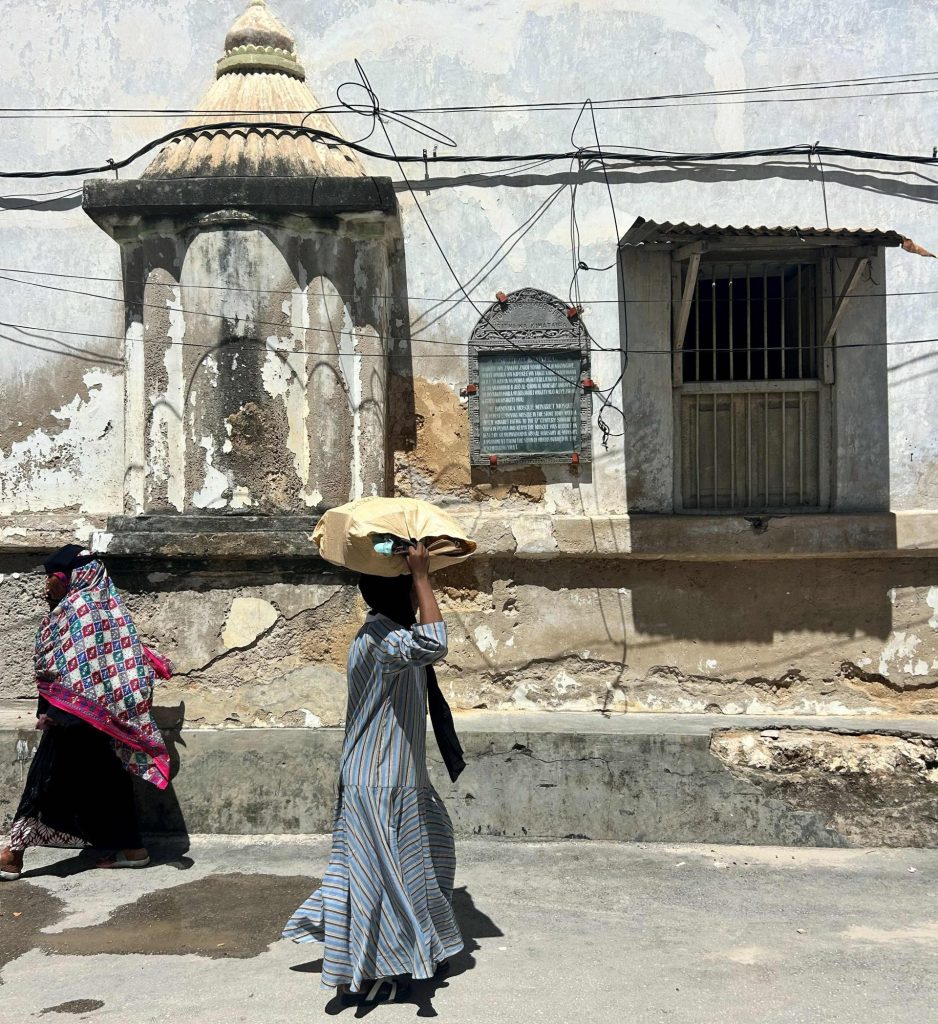
Today, despite being separated by hundreds of kilometres, both towns remain vibrant communities where heritage is not confined to monuments or museums but continues to shape everyday life. Conserving these buildings is therefore not only about protecting their physical fabric, but also preserving the roles, stories and traditions they hold within their communities.
2. Both cities are built from coral stone
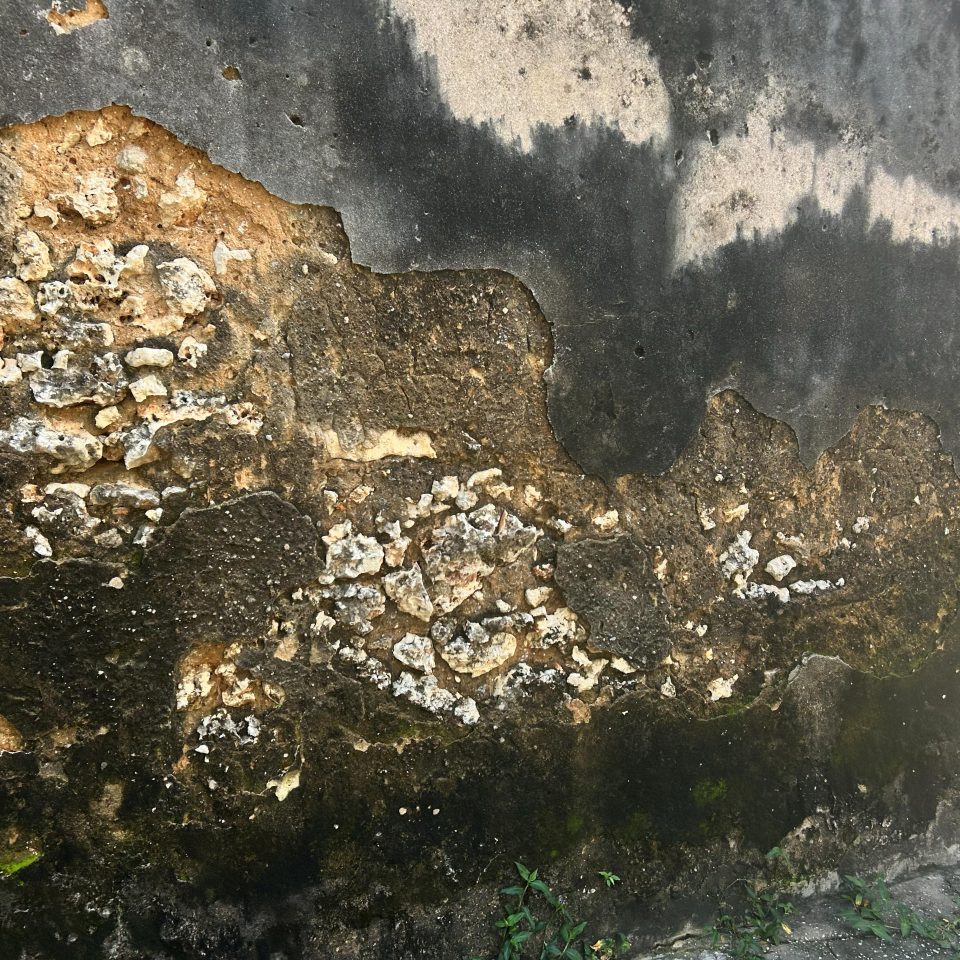
For centuries, builders in Stone Town and Mutsamudu have used blocks of fossilised coral, bound together with traditional lime mortar and supported by timber, to create buildings suited to the tropical island climate. These materials and the skills needed to work with them shaped both the Ba’mnara Mosque and Swaniani Princely House.
However, these shared construction traditions were adapted in different ways. The roof of the Ba’mnara Mosque was constructed using round boriti (mangrove poles), while carpenters at Swaniani Princely House used squared hardwood beams. These details give each building its own architectural character and demonstrate why conservation work must respond to its particular materials and construction. At the same time, their shared reliance on coral stone, timber and traditional craftsmanship creates a strong connection between the two sites.
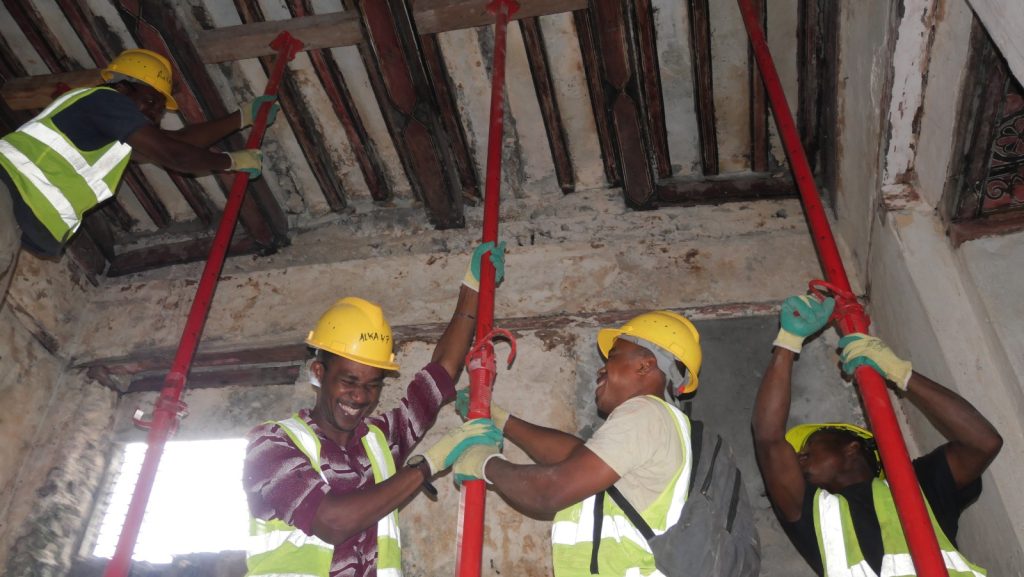
Maintaining these buildings today depends on preserving those traditional construction techniques. Passing these skills on to a new generation of craftspeople is therefore just as important as conserving the buildings themselves and through ‘Salt and Stone’, local craftspeople will develop their skills in traditional masonry and carpentry while contributing directly to the conservation of the two buildings.
3. Climate change threatens both places
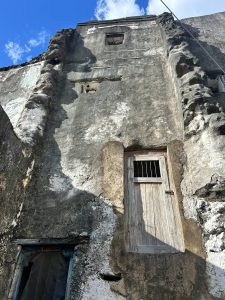
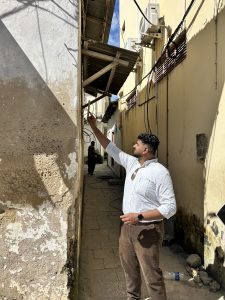
Stone Town and Mutsamudu are both exposed to a demanding tropical island climate. Heavy rainfall, high humidity, rising temperatures and salt carried from the sea can all accelerate the deterioration of historic buildings. Changing weather patterns place further pressure on vulnerable roofs, timber structures, lime plaster and coral-stone walls.
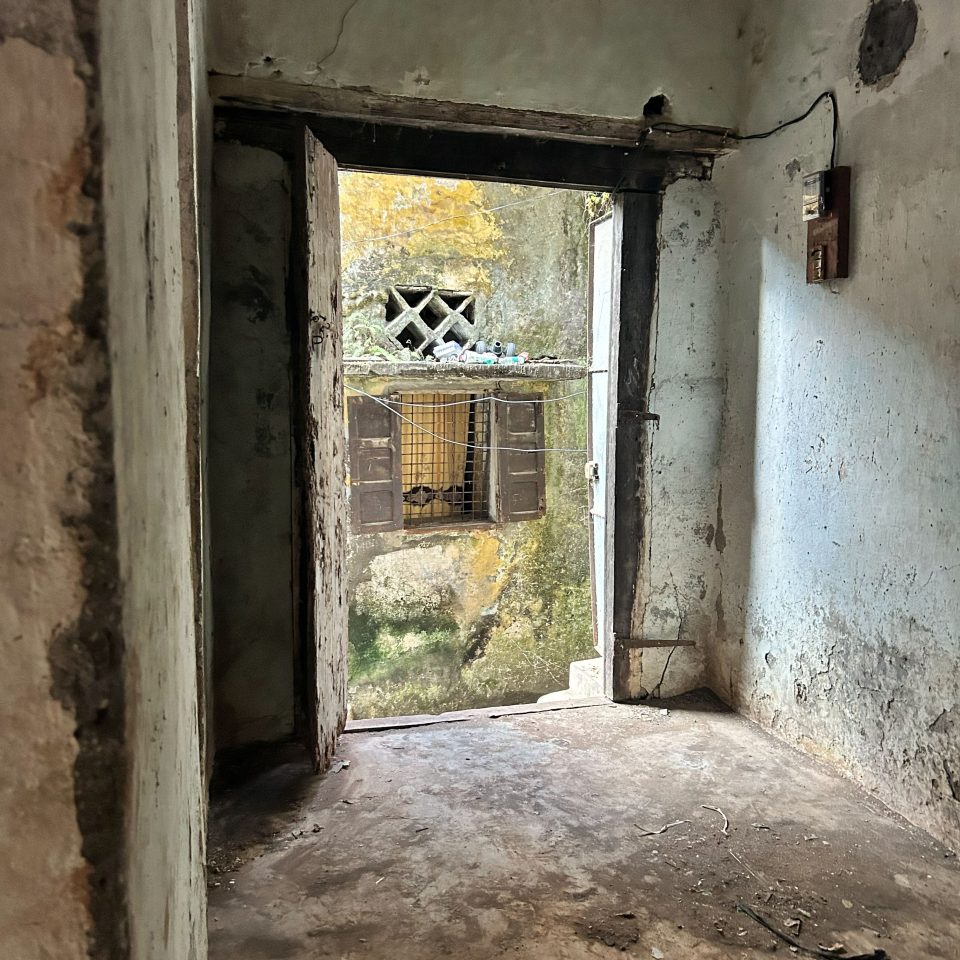
These challenges can already be seen at the Ba’mnara Mosque and the Swaniani Princely House where water entering through the roof and walls of both sites has contributed to the deterioration of their historic fabric.
Through ‘Salt and Stone’, the teams in Zanzibar and the Comoros are working with each other to assess how climate change is affecting the two buildings and their surrounding towns. The National Trust’s climate expertise is also helping the teams share knowledge and choose conservation materials and techniques that better protect timber and masonry from moisture, salt, heat and increasingly severe weather. At the Ba’mnara Mosque, for example, the corroded iron roof sheets will be replaced with corrugated aluminium sheets, chosen for their greater durability and resistance to corrosion in the coastal environment. The timber roof structure will also be strengthened and the rainwater drainage improved, helping to protect the mosque’s walls and foundations from further water damage.
The project will also support the development of maintenance plans for both buildings. Owners and custodians will be trained to identify climate-related risks, carry out routine inspections and respond to problems before they cause more serious damage. This will help ensure that the two buildings can be cared for long after the conservation work has been completed.
4. World Heritage isn't just about famous buildings
World Heritage status does not recognise Stone Town or Mutsamudu because of a single palace, mosque or monument. It reflects the significance of the wider historic town: its streets, houses, markets, places of worship and public spaces, as well as the traditions, craftsmanship and community life that continue within them.
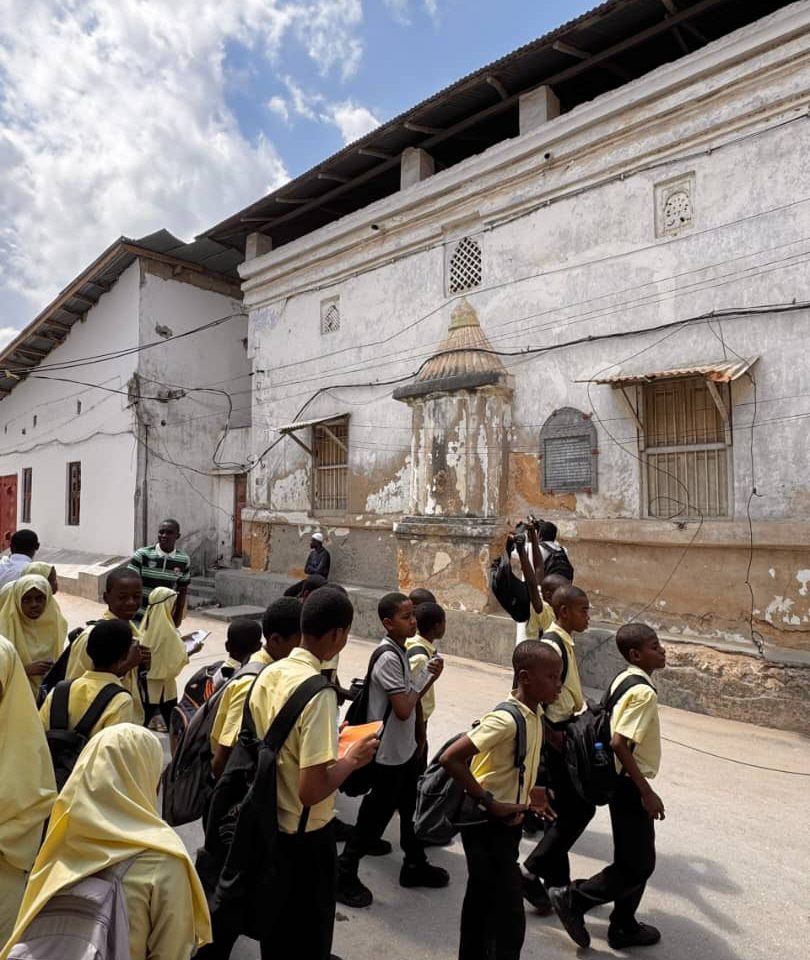
Stone Town is recognised as an outstanding example of a Swahili trading town, with a historic urban fabric that brings together African, Arab, Indian and European influences.
Mutsamudu forms part of the Medinas of the Historic Sultanates of the Comoros, a group of six historic towns recognised for their distinctive urban forms, architecture and living social traditions, shaped by migration and Indian Ocean trade.
The Ba’mnara Mosque and Swaniani Princely House are therefore important not only as individual historic buildings, but also as parts of these wider cultural landscapes. By conserving them and supporting their continued use, ‘Salt and Stone’ is contributing to the protection of the character, history and living heritage of both World Heritage sites.
5. Now they can learn from each other
Stone Town has been on the UNESCO World Heritage List since 2000 and has more than 25 years of experience in conserving and managing a living World Heritage town. Mutsamudu’s inscription in 2026 brings new recognition and momentum, alongside its own long-established knowledge of local buildings, materials and traditions.
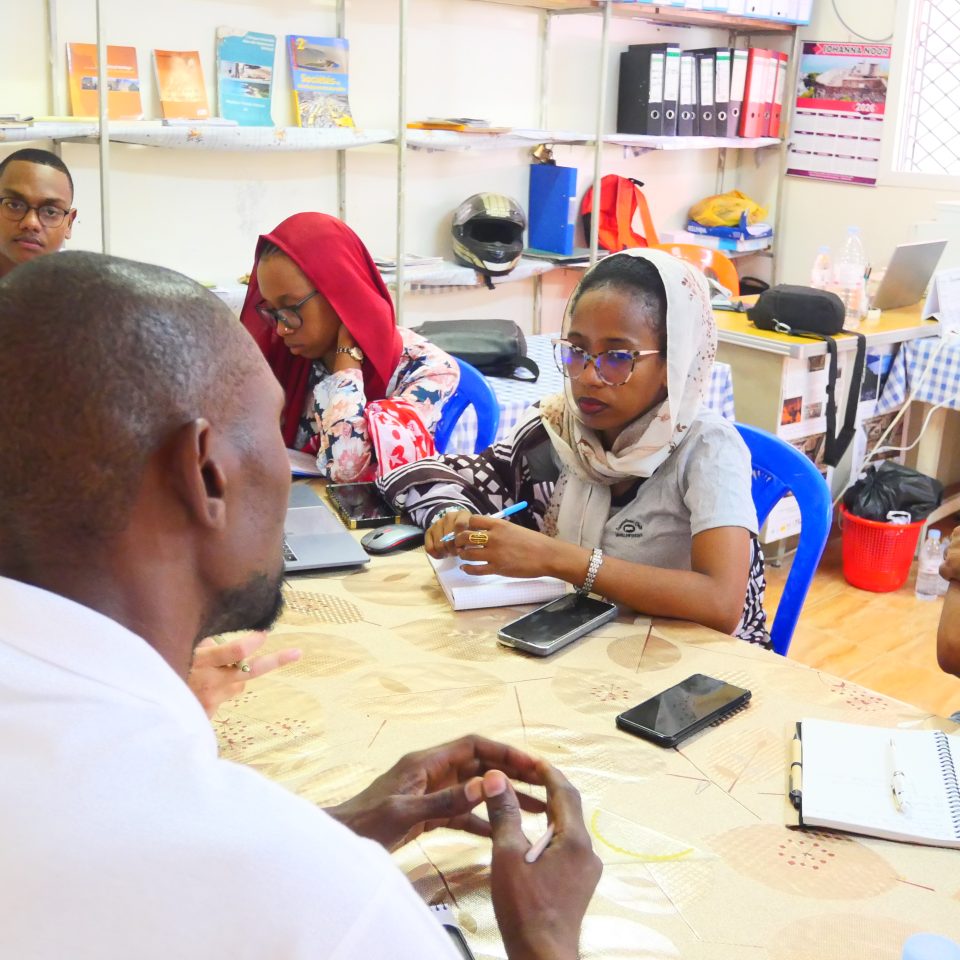
‘Salt and Stone’ creates an opportunity to bring these experiences together. Partners in Zanzibar and the Comoros can exchange knowledge about conserving coral-stone buildings, training craftspeople, involving young people in heritage, balancing tourism and development with community life, and caring for historic places in a changing climate.
This exchange is not about applying one solution in two different places. It is about learning from the experience of each town, identifying shared challenges and adapting ideas to suit each community and building. By connecting the people caring for the Ba’mnara Mosque and Swaniani Princely House, ‘Salt and Stone’ is building relationships that can support heritage conservation long beyond the restoration of the two sites.
Headline statistics
2
World Heritage sites connected through ‘Salt and Stone’
2000
The year Stone Town was inscribed on the World Heritage List
6
Comorian medinas included in the new inscription
2026
Mutsamudu joins the World Heritage List
More project news from INTO
BlogsINTO ProjectsProgrammes
RISE impact: ‘The Encounter’ at Seville Great House and Heritage Park
July 13, 2026