BlogsClimate changeINTO Projects
Celebrating two World Heritage sites through ‘Salt and Stone’
September 21, 2026

‘Salt and Stone’ is a two‑year project dedicated to safeguarding Swahili coastal heritage in Zanzibar and the Comoros.
Delivered in partnership with the Zanzibar Stone Town Heritage Society (ZSTHS) and the Collectif du Patrimoine des Comores (CPC), and supported by ALIPH (the International Alliance for the Protection of Heritage), the project focuses on the restoration of two historic buildings facing accelerating climate‑related threats, including sea‑level rise, salinisation, increased humidity, and more frequent extreme weather events.
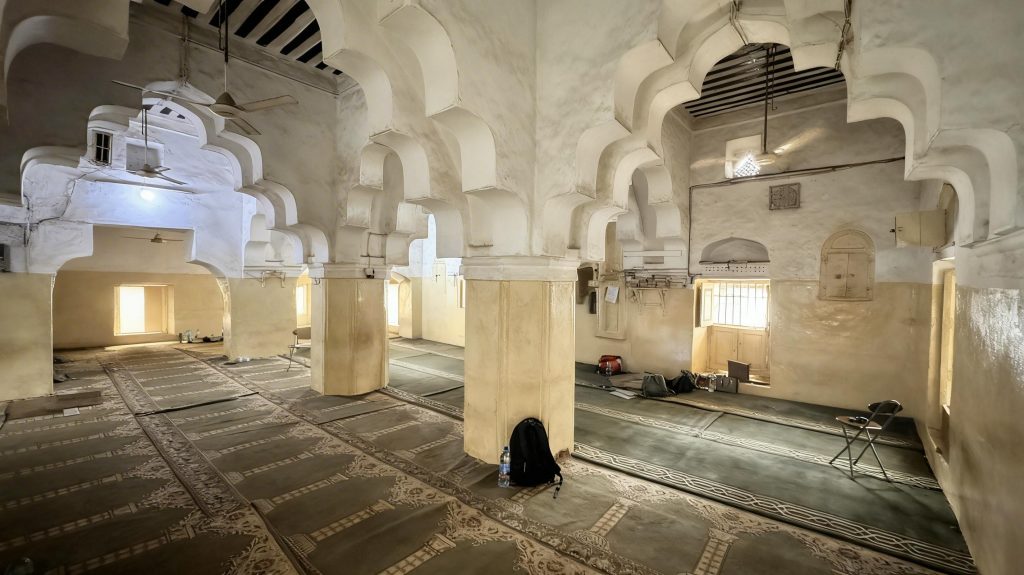
Ba’mnara Mosque, Stone Town, Zanzibar, Tanzania © Hoshil Dhanji
Drawing together architectural conservation, climate‑adaptive planning, community engagement, and regional knowledge exchange, the project aims to strengthen long‑term resilience across two emblematic public heritage sites: the Ba’mnara Mosque in Stone Town, Zanzibar, and the Swaniani Villa in Mutsamudu, Comoros. Both represent significant Swahili cultural and architectural traditions, and both face acute climate‑related risks requiring stabilisation, repair, and culturally sensitive adaptation.
Through these interventions, ‘Salt and Stone’ will not only stabilise and protect two endangered structures, but also enhance local conservation skills, broaden community participation, and create opportunities for sustainable, heritage‑based economic activity. The project’s impact will extend beyond the two buildings themselves, contributing to stronger regional collaboration and equipping local communities to protect, maintain, and value their heritage in a changing coastal climate.
Built in the 19th century, the Swaniani Princely House in Mutsamudu is a historic monument of Swahili type. It features unique characteristics, particularly in the highly refined craftsmanship evident in its construction, including its wall decorations and woodwork.
Its proximity to the seashore exposes it to the harmful effects of sea spray and salt crystals on traditional building materials, especially stone, plaster, and wood. These threats are intensifying today due to climate change, which, among other impacts, leads to acid rain that significantly affects old stone houses.
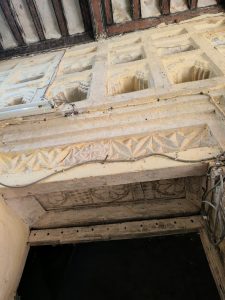
Swaniani Princely House interior with niches

Timber beam ceilings inside the villa
This project, developed through regional and international partnership, aims to restore this pillar of the region’s cultural identity by preserving its integrity through the treatment and restoration of beams, stucco niches, friezes, and plasterwork, while also exploring its potential as a catalyst for the development of cultural industries.
Designed to become an open site, the initiative aligns with sustainable development goals and the preservation of cultural heritage against the effects of climate change. It places particular emphasis on community engagement – especially women and youth – as well as on skills development and capacity building, in order to stimulate economic growth through the promotion of cultural heritage.
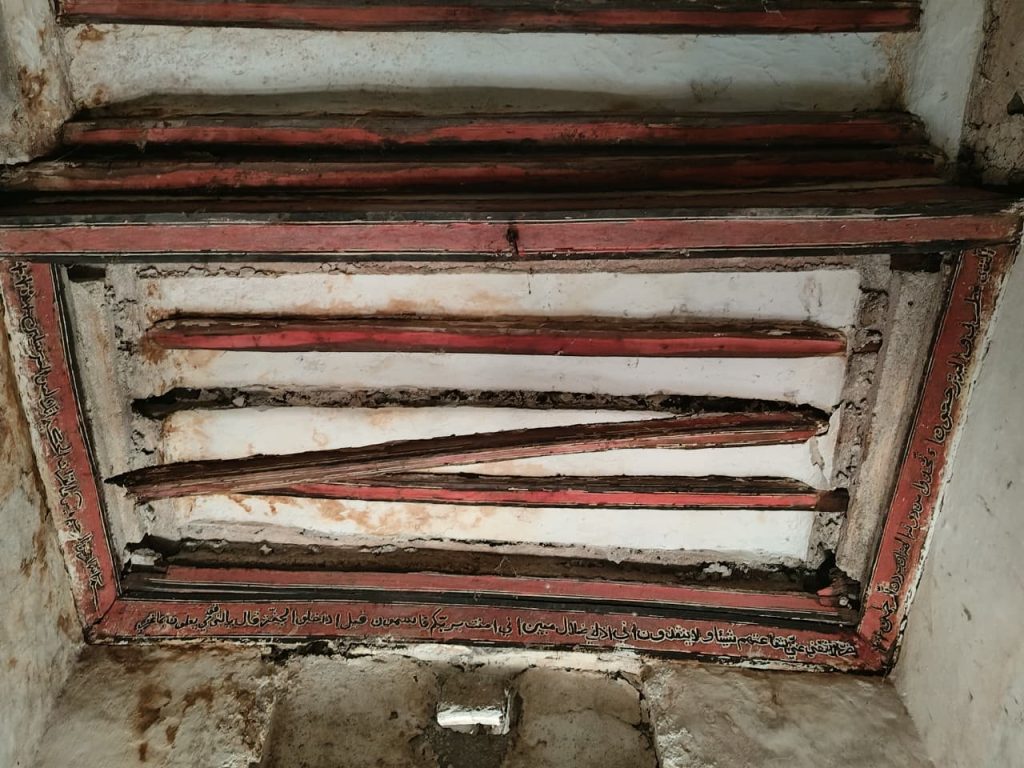
Decorated ceiling in the Swaniani Princely House with Qaranic verses © Missoubahouddine Ben Ahmed
"For me, this project is about making sure these places are not just repaired, but properly set up to be cared for in the long term, by the people who know them best.”
The historic Ba’mnara Mosque is an important religious and cultural landmark in Stone Town, Zanzibar, built in 1250 AH (c. 1834/1845 AD). It was founded by Muhammad b. Abdulkadir al‑Mansaby, a prominent merchant from the Benadir coast of Somalia. The mosque was likely constructed on the site of a 17th‑century Sunni mosque and was later enlarged in 1841 and again in 1890 under Seyyid Ali bin Said. Among the roughly 50 mosques in Stone Town, it is the only one classified as a Grade I listed monument and remains an active place of worship used daily by the local community. Architecturally, it is notable for its rare conical minaret – one of only three in East Africa and the only example standing on a base.
Today, the mosque faces increasing threats from coastal climate conditions, salt damage, moisture, and gradual structural deterioration affecting its coral stone structure. Without careful intervention, these factors could lead to the loss of important historical fabric.
The project will produce detailed surveyed architectural drawings documenting the mosque and develop a climate-adaptive rehabilitation plan to guide its conservation. The broader objective is to support the long-term protection of Zanzibar’s coastal heritage while strengthening local capacity to care for vulnerable historic sites.
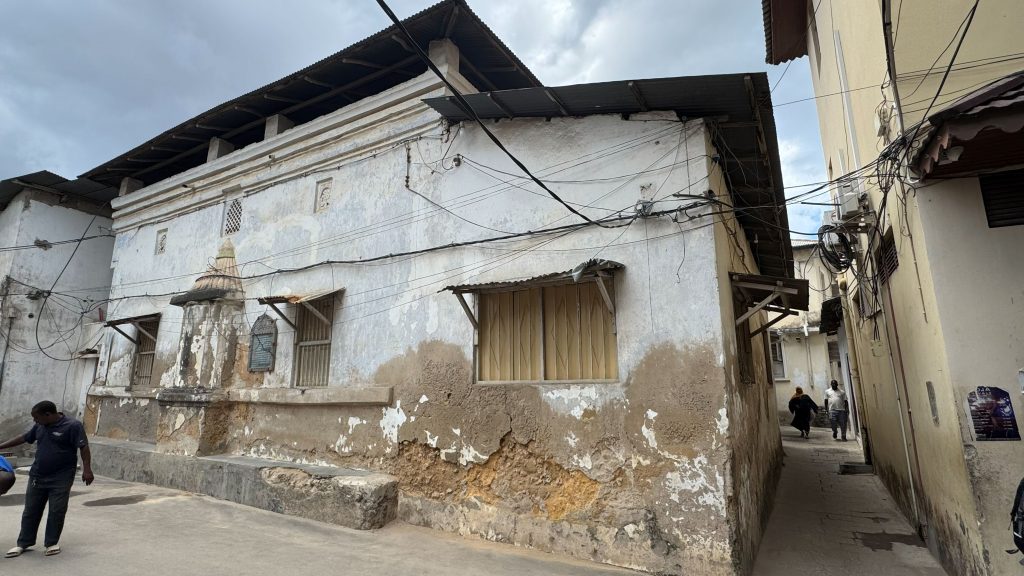
Ba’Mnara mosque walls showing salt erosion © Hoshil Dhanji
In keeping with the INTO ethos, a central pillar of ‘Salt and Stone’ is the strengthening of relationships, skills, and shared knowledge among heritage practitioners in Zanzibar and the Comoros. The project’s capacity‑building component consists of three linked activities designed to foster collaboration, learning, and community participation.
A joint study visit to the National Trust (England, Wales and Northern Ireland) will bring the Zanzibar and Comoros teams to the UK to build upon professional connections and deepen collaboration across all three organisations. The visit will offer opportunities to learn from the National Trust’s extensive experience in climate adaptation, risk management, and large‑scale heritage stewardship, while also creating space for the Trust to learn from the partners’ context‑specific expertise in conserving Swahili coastal heritage under increasingly challenging environmental conditions.
Each country will deliver a tailored training programme which will begin with a community‑informed skills assessment to identify local needs in Zanzibar and the Comoros. Practical training in timber repair, stone masonry, and lime plaster techniques will follow, strengthening traditional building skills and safeguarding heritage knowledge. The programme will grow the local conservation workforce, with inclusive opportunities for women and young people.
The project will conclude with a regional conference bringing together conservation professionals, policymakers, researchers, and community organisations from across the Western Indian Ocean. The event will present project findings, share lessons learned, and foster dialogue on the future of climate‑resilient coastal heritage.
For more information about ‘Salt and Stone’ or to explore opportunities for collaboration, please contact the Programme Manager, Charlotte Thomas.
This half‑million‑dollar initiative runs until March 2028 and is supported by ALIPH.

September 21, 2026