BlogsCase StudiesINTO Projects
Headquarters House: histories of architecture and enslavement in Jamaica
January 14, 2026

A new blog from ‘Withstanding Change’ Programme Manager, Charlotte Thomas.
INTO has just launched a new short film telling the story of the Ghassania Theatre in Homs, Syria. Restored through our ‘Withstanding Change’ programme, the theatre stands today as a place of culture, learning and community in a city shaped by both conflict and climate pressures.
This film marks the first time we are sharing this work in depth. While the Ghassania Theatre has been part of the programme since 2022, much of what has happened there has taken place quietly and carefully, away from the spotlight. The film offers an opportunity to see how the theatre has been restored, how it is being used, and why it matters in a context where heritage, recovery and resilience are deeply intertwined.
Located in the Old City of Homs, the Ghassania Theatre forms part of a historic educational complex dating back to the late nineteenth century. Before the war, it hosted performances, exhibitions and community events, and sat at the heart of a neighbourhood known for its religious and cultural diversity. In 2012, during the siege of Homs, the building was hit by a bomb and left badly damaged.
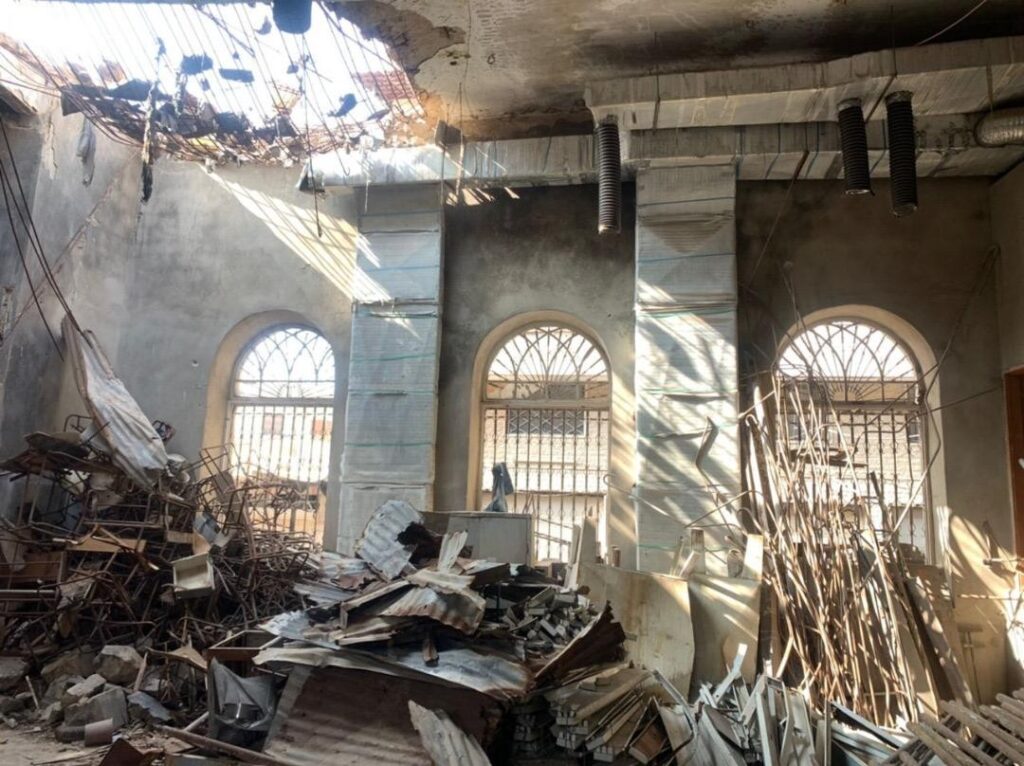
Its restoration began in 2022, led by our partner organisation Turathuna (Our Heritage) under the direction of architect Lama Abboud, with funding from the British Council’s Cultural Protection Fund.
From the beginning, the aim was never simply to repair a building. The project set out to restore the theatre as a living space, one that could support cultural activity, skills development and community connection, while also responding to the realities of a changing climate.
The restoration combined traditional craftsmanship with practical climate adaptation measures. Local stonemasons, carpenters and metalworkers were involved throughout, helping to revive skills that had been disrupted by years of conflict. Original features were repaired wherever possible, from patterned cement tiles to the black stone façade, with new elements carefully matched to what survived.
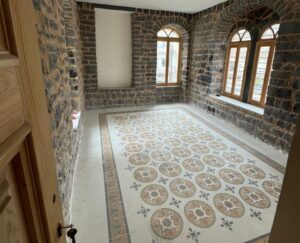
Part of the theatre interior with a tiled floor
The building now operates using solar energy, with water collection systems designed to respond to increasingly scarce rainfall.
These choices reflect a wider principle running through ‘Withstanding Change’: that heritage sites can model sustainable, climate-conscious approaches rooted in local knowledge. But as the film makes clear, the most important change has been the return of people.
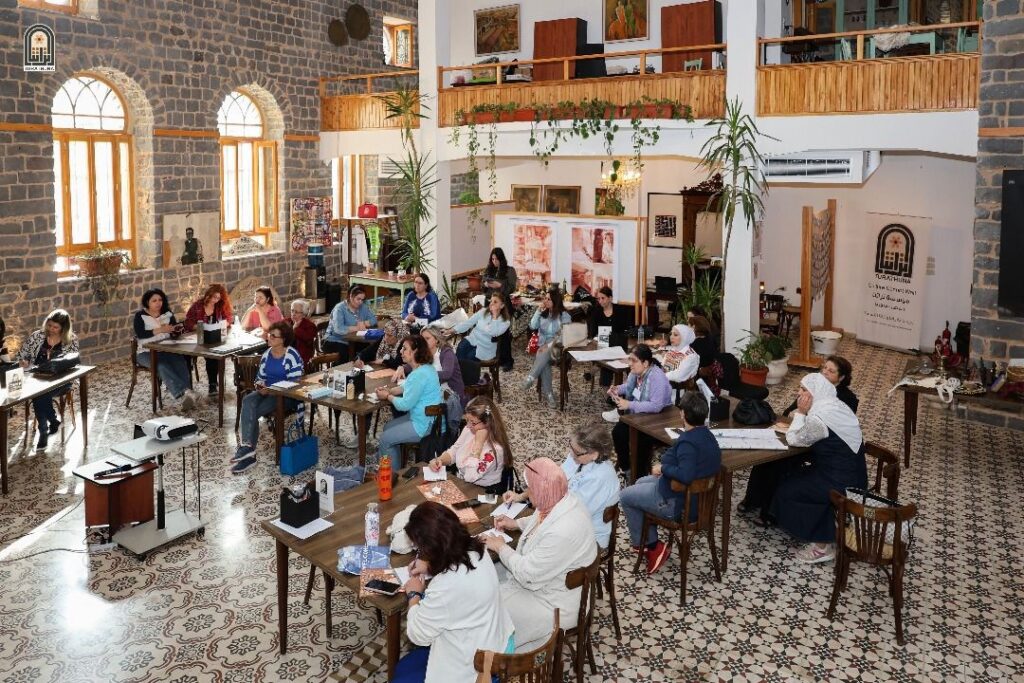
A group meeting for women inside the restored theatre
Heritage sites can model sustainable, climate-conscious approaches rooted in local knowledge. But as the film makes clear, the most important change has been the return of people.
Since reopening, the Ghassania has hosted workshops, exhibitions, heritage walks and cultural events. Women’s heritage and entrepreneurship workshops have brought together participants from across Homs; many of whom are now navigating what recovery means in practice.
The theatre has become a place where people meet, learn and share experiences. For some, it is a rediscovery of a space they remember from childhood. For others, it is their first time entering a historic building in their own city and understanding its story.
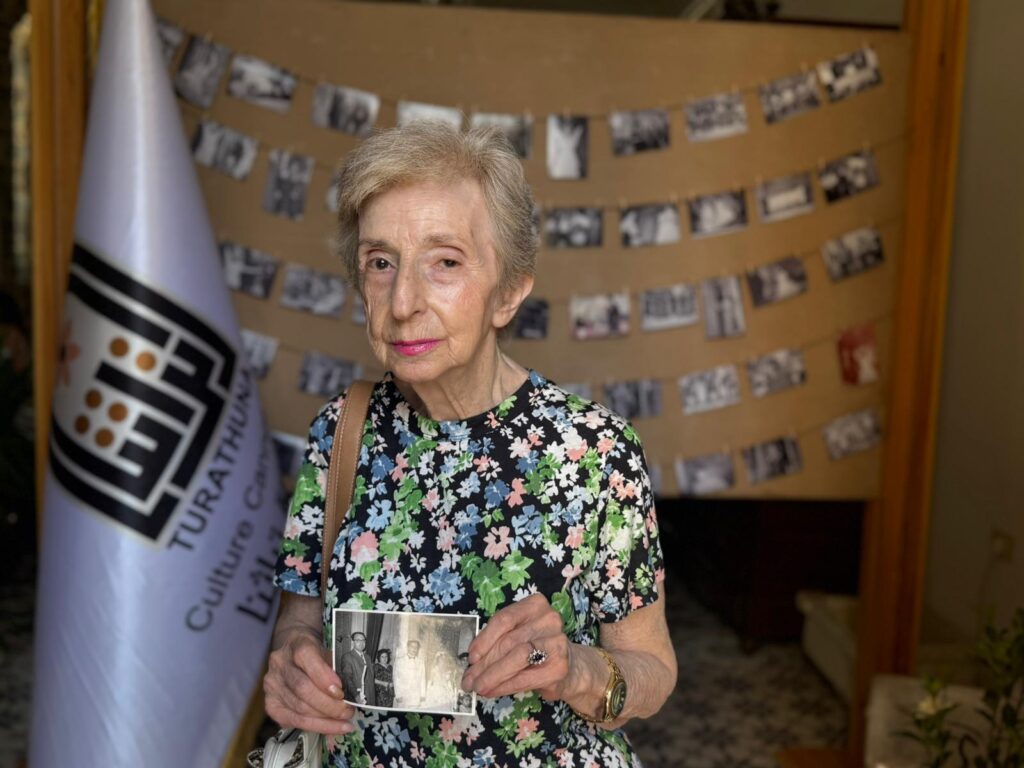
A participant in a ‘Memory of place’ workshop
The film centres these voices. Participants speak about what it means to reconnect with heritage in a landscape still marked by loss, and how cultural spaces can help rebuild trust, confidence and a sense of belonging. In a context where climate stress, economic pressure and the legacies of conflict overlap, these moments of connection matter.
Across the ‘Withstanding Change’ programme, we have seen how restored heritage sites can support climate adaptation in very practical ways. They provide shaded public spaces in hotter cities, revive traditional building techniques suited to local environments, and act as anchors for community-led action.
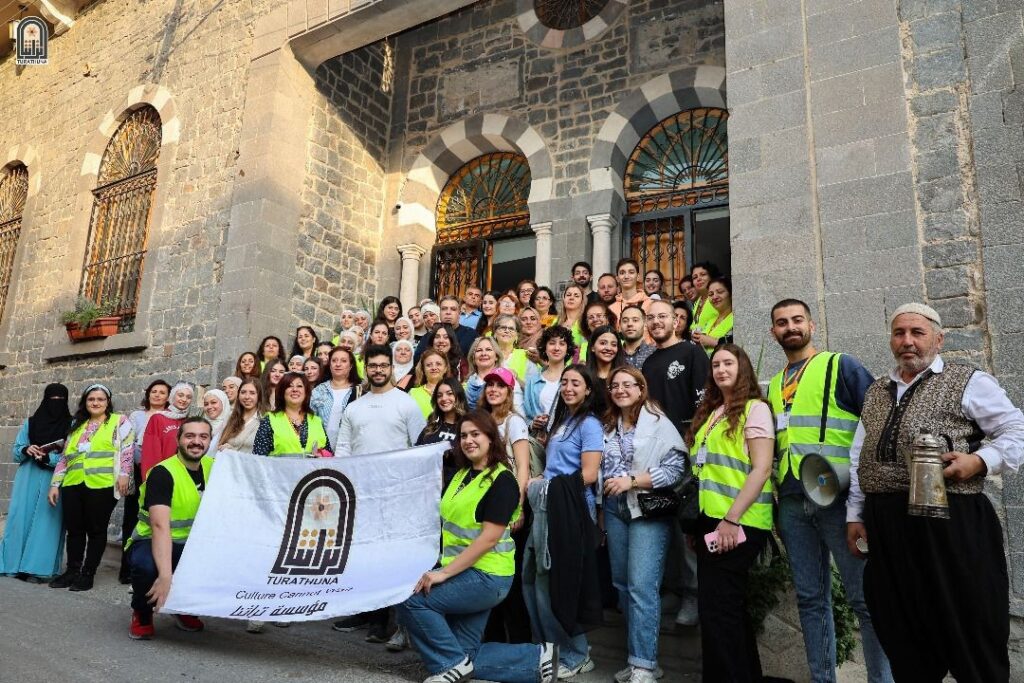
A Heritage walking group meet at the theatre
In Syria, these dynamics are intensified. Climate impacts such as water scarcity and extreme heat are layered onto the long-term effects of war and displacement. The Ghassania Theatre shows how heritage can still play a role in shaping the future, even under the most challenging circumstances. Heritage and culture are not luxuries in times of crisis. They are part of how communities recover.
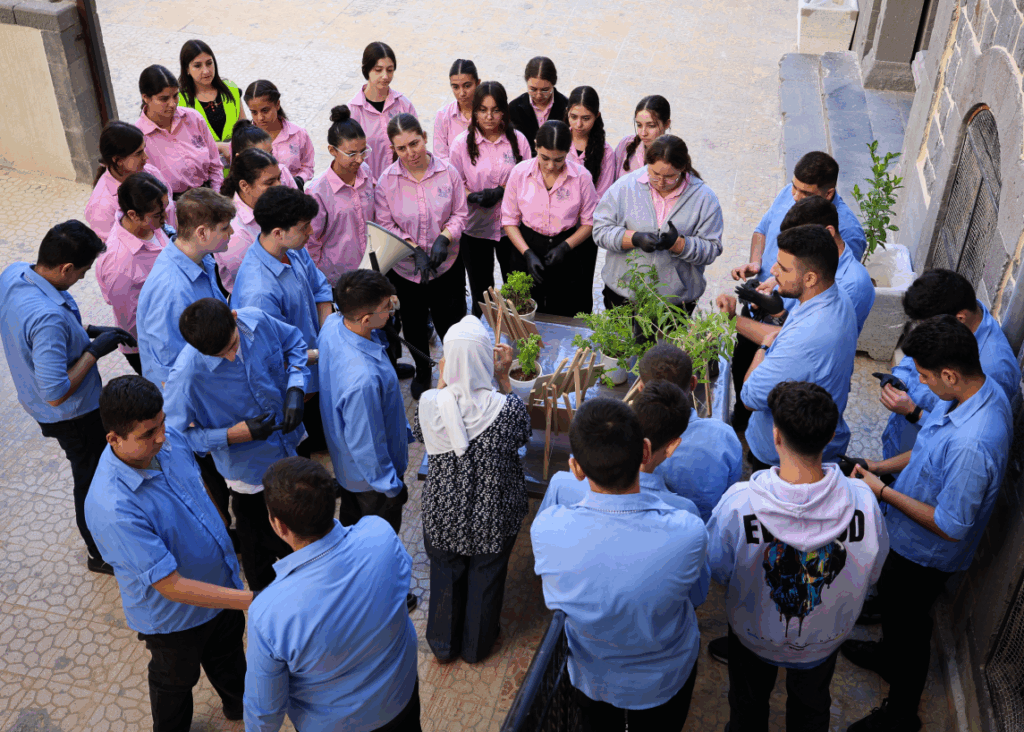
A group of school students taking part in a ‘Go green!’ workshop
This film does not attempt to document the restoration process itself. Much of that work took place in difficult circumstances, over a long period of time, and was not always possible to record in a conventional way. Instead, the film focuses on what the restoration has made possible: the return of the Ghassania as a living cultural space, and the ways people are using it today. In doing so, it captures something just as important as the physical repair of the building: its social and cultural impact.
Heritage and culture are not luxuries in times of crisis. They are part of how communities recover.
Turathuna is an equal partner in the ‘Withstanding Change’ programme. Across six countries, partners have demonstrated how cultural heritage can support communities facing climate change by strengthening social ties, sustaining knowledge and creating spaces for collective action.
As INTO continues to advocate for heritage to be recognised within global climate frameworks, stories like this are essential. They move the conversation beyond abstract policy and show, in real terms, how heritage contributes to resilience on the ground.
We hope this film offers not only insight into a remarkable restoration, but also a reminder of why heritage belongs in every climate conversation.
January 14, 2026
December 17, 2025