What is a National Trust really?
A blog by Catherine Leonard, Secretary-General
I’ve been thinking a lot about the INTO model recently. What is a National Trust and what does it do? There are various reasons for this. First, we regularly receive enquiries seeking INTO’s advice on the National Trust approach. The answer is often that there is not one single model, but a series of principles. And that each country needs to find its own solution based on these. We set out the defining features in our Handbook for Heritage Trusts.
Core principles of a National Trust
- Classified as a charity, non-profit organisation or foundation (i.e. independent from government)
- Community-based
- A broad constituency or membership
- Site management or stewardship function
- Education and advocacy role
- Civic engagement
Each organisation is different and responds to local circumstances. There are some similarities in constitution, for example across trusts in the Commonwealth and British Overseas Territories. However, each has its own approach.
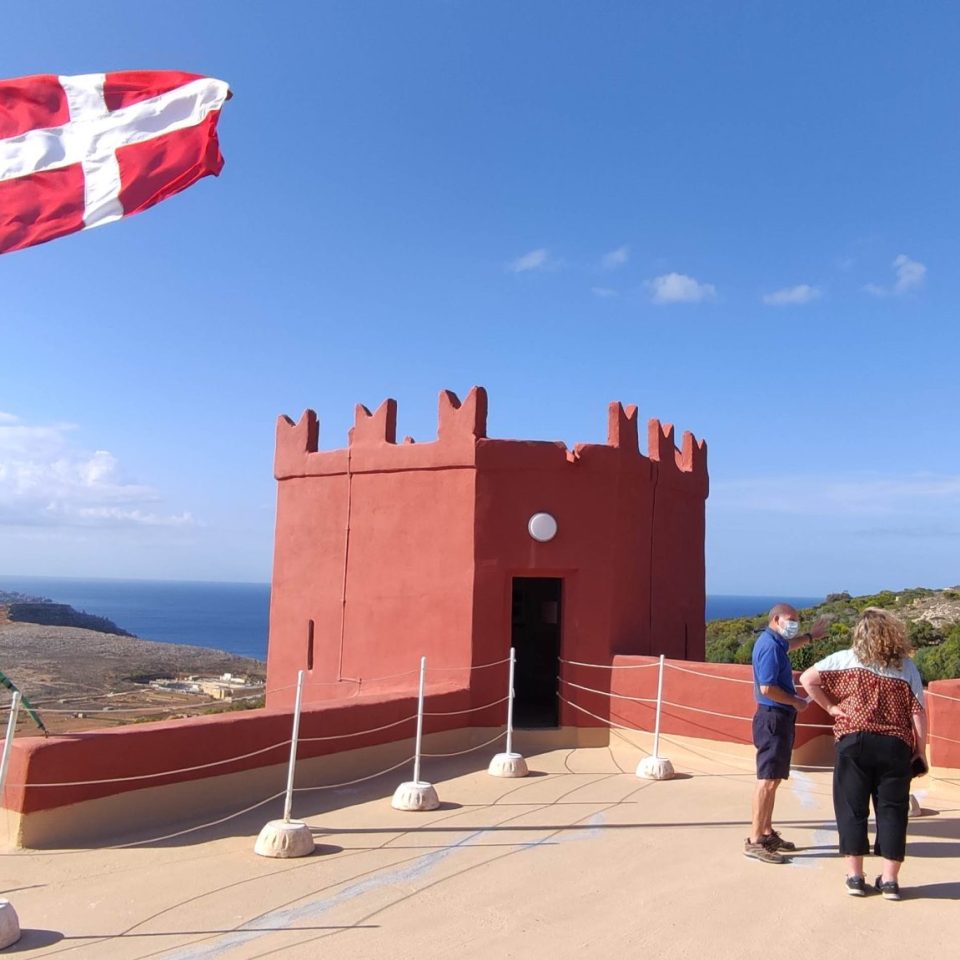
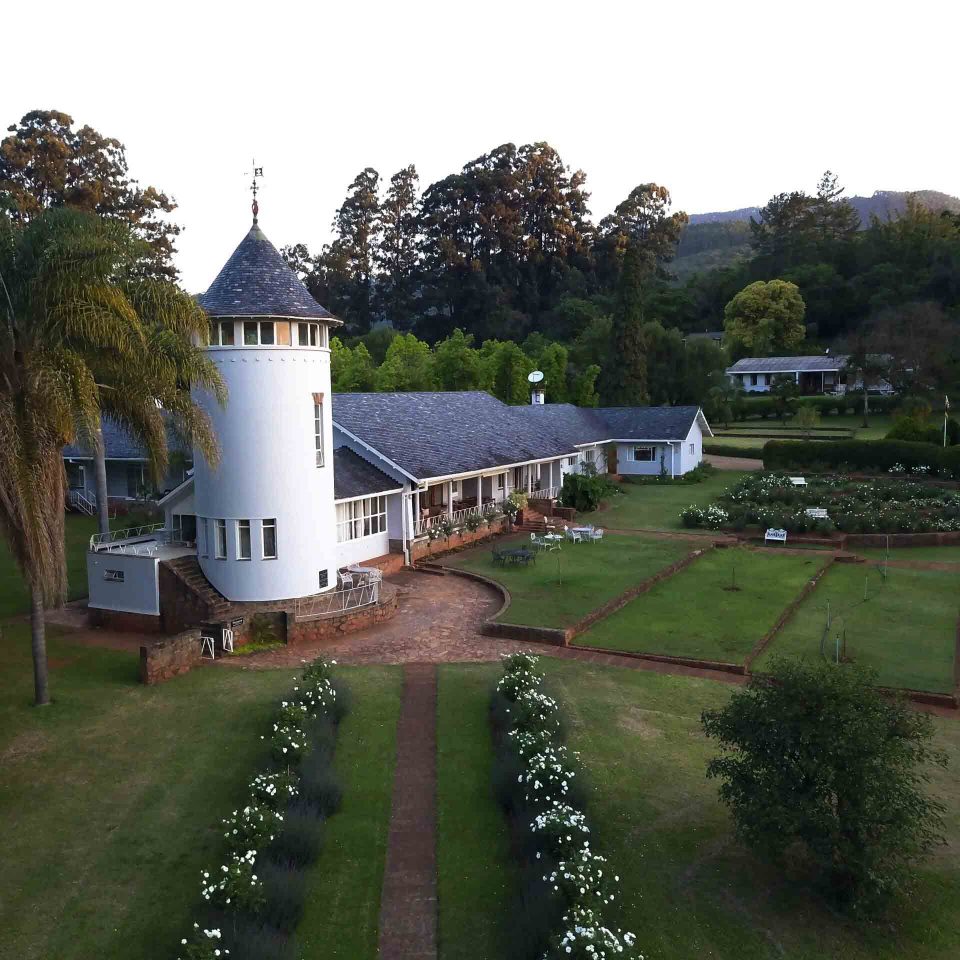
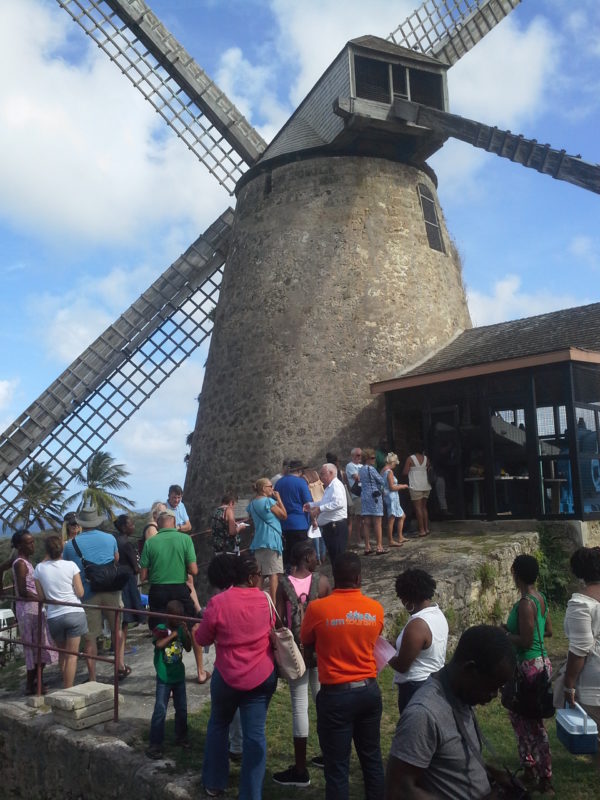
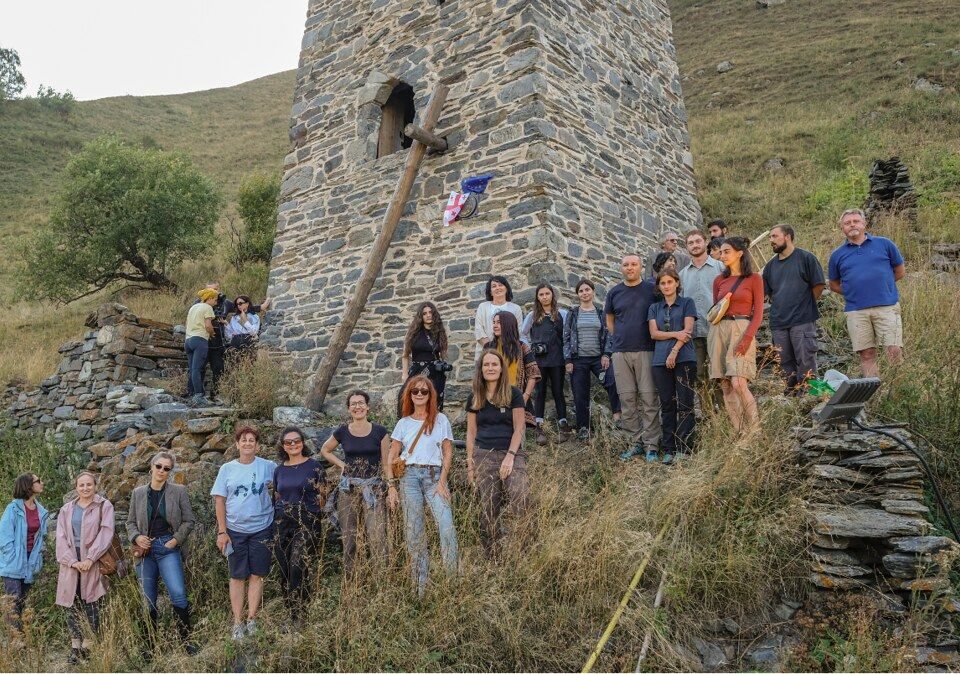
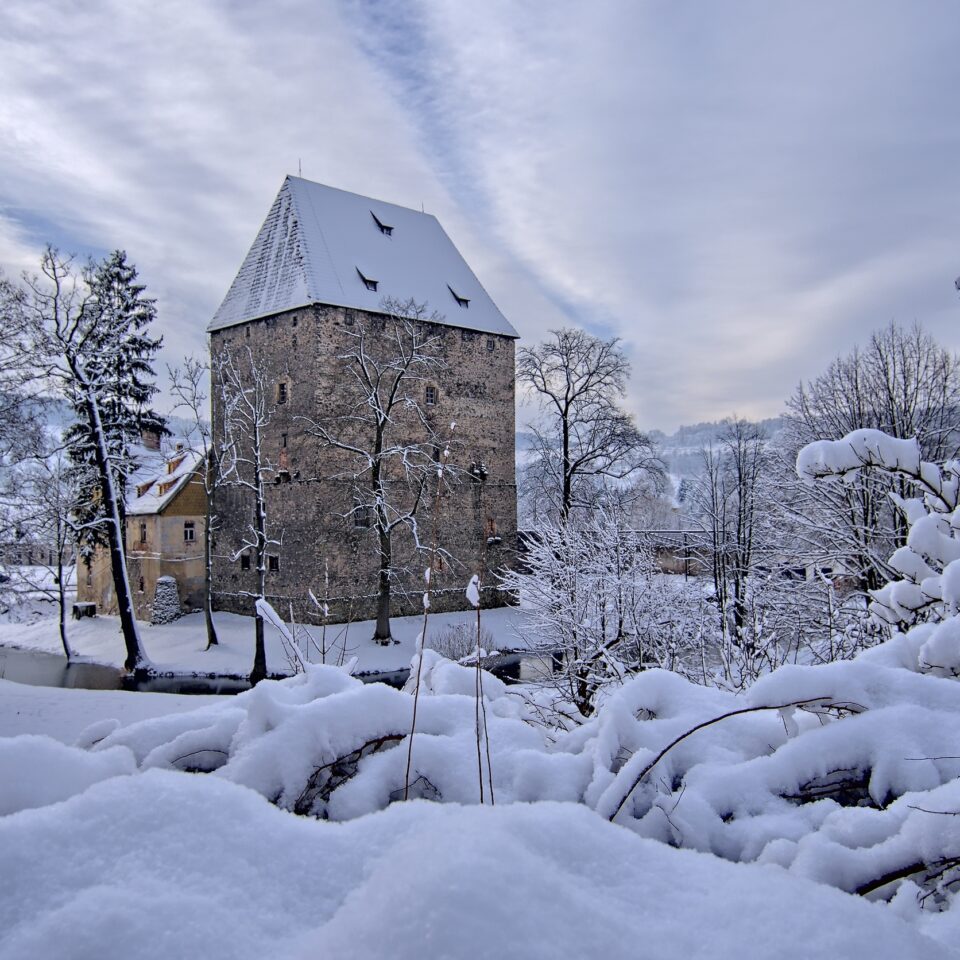
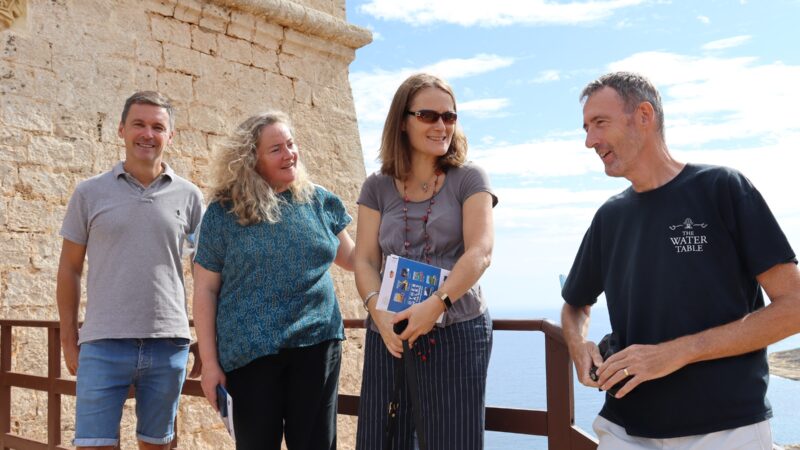
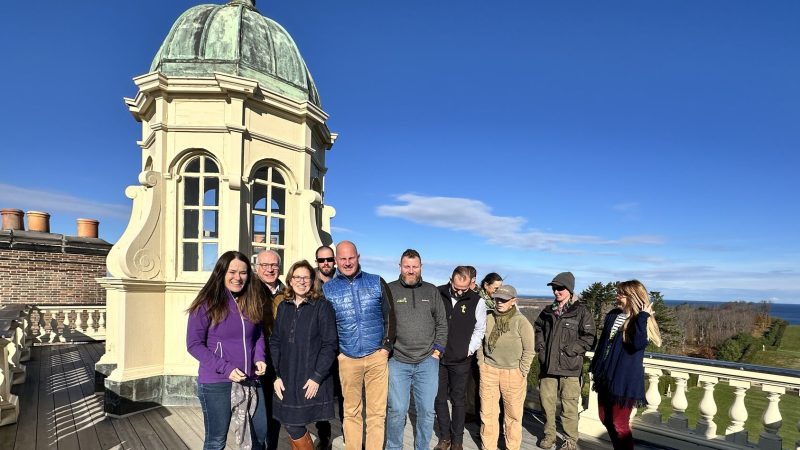
Similar but different 'towers' in the care of INTO members: Din l'Art Helwa - the National Trust for Malta; Zimbabwe National Trust; National Trust of Georgia; Chudow Castle Foundation; Barbados National Trust
Learning across borders
At the end of last year, we joined a partnership exploring future heritage structures in Mauritius. This included discussions with public and private stakeholders about how a National Trust-type organisation might complement existing systems. During the visit in March, what struck me most was both the richness of the island’s heritage and the opportunity to develop a more coordinated, community-based approach to its care.
In April, we hosted delegations from the Fondation du Patrimoine in France and Kultur Erbe Bayern in Germany. We also sent colleagues to spend time with the Trustees of Reservations in the United States, with support from the 1772 Foundation. These exchanges are a reminder that every organisation, however well-established, is always evolving. And each visit sparked rich conversations about all aspects of our work.
Ask INTO
Alongside these in-person encounters, we receive a steady stream of practical requests. These range from the highly strategic to the very operational. One member in Australia, for example, is undertaking a major renewal of its digital platform and looking to learn from peers on web and app development.
A global knowledge exchange
Members ask us to contribute to strategic thinking, with recent requests from Canada and Malaysia for global perspectives to inform organisational reviews and mission development. At the same time, many enquiries are highly specific and time‑sensitive. Connecting a colleague in Libya with partners in Malta to study historic water systems. Advising Saint Lucia on membership models. Or supporting Barbados with ideas for a museum shop. Taken together, these exchanges form an active ecosystem of shared learning. Knowledge flows quickly across the INTO network in response to real‑world challenges.
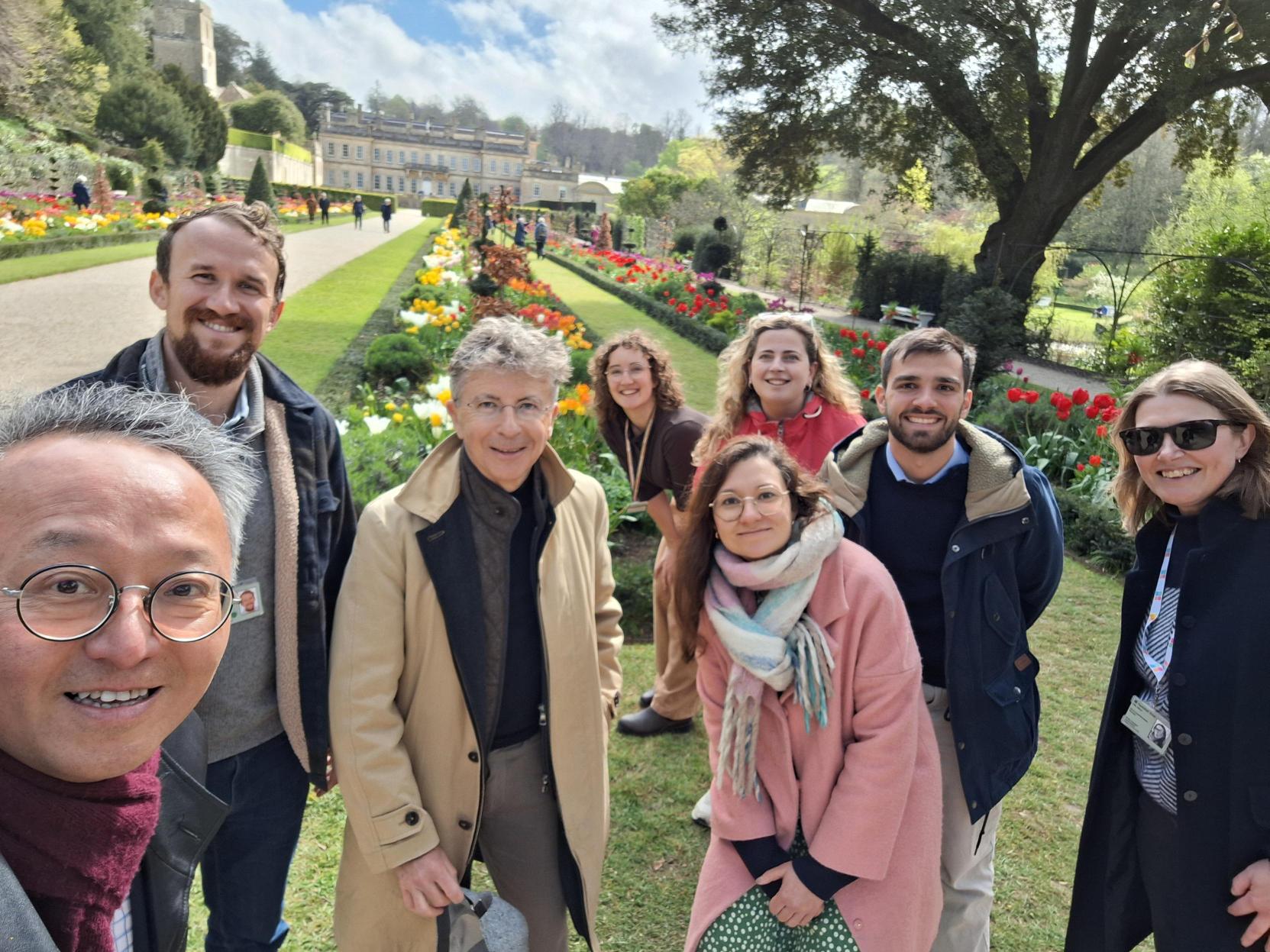
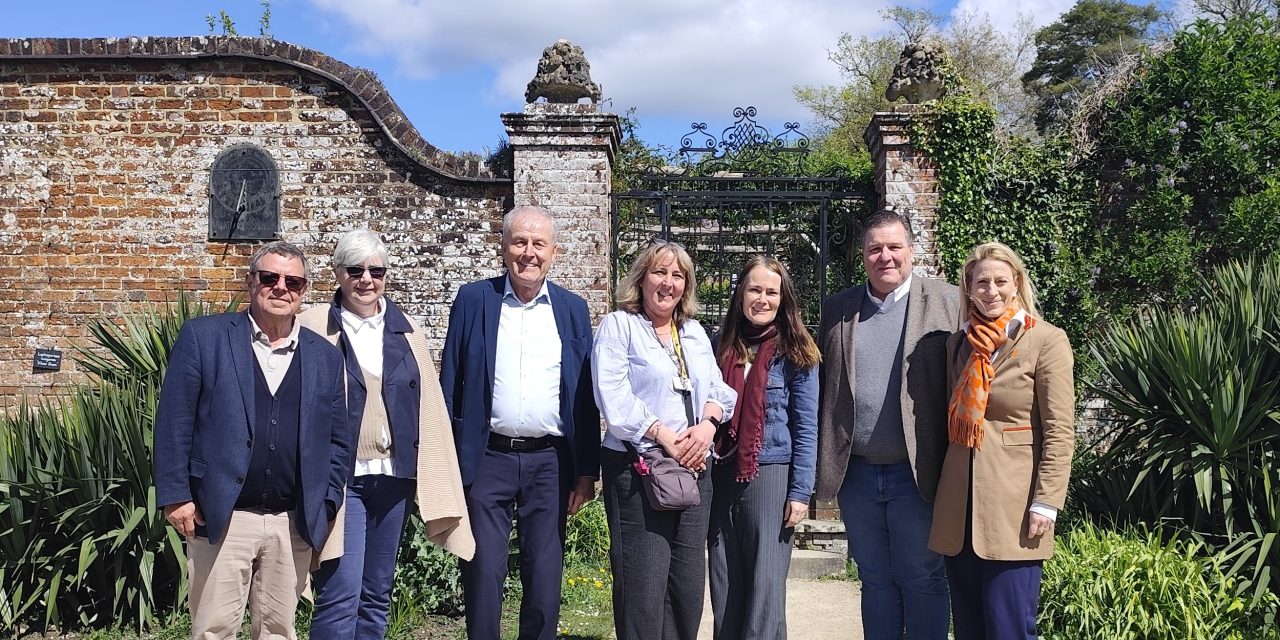
Colleagues from the Fondation du Patrimoine, National Trust and INTO at Dyrham Park
INTO Bavaria 2026
We are delighted that Kultur Erbe Bayern will host the next INTO Conference, offering another opportunity to come together, share ideas, explore the 'National Trust' approach developed over the last ten years in Bavaria and deepen collaboration across our global network
Find out more hereAn accelerator for change
This year, we are once again working with Europa Nostra on the Inclusive European Heritage Residency 2026, hosted by Din l-Art Helwa in Malta. These programmes are a practical expression of everything described above. How to take the overall idea of a National Trust and translate it into something that works in your country.
Incubator –> Residency –> Accelerator
We’ve previously called weeks like these an Incubator but I actually like to think of them as accelerators. They give evolving heritage organisations the chance to immerse themselves in the workings of a National Trust. Governance, fundraising, site management, advocacy – really getting under the bonnet and exploring how all of these aspects might translate into their own contexts. Just as importantly, they create space for peer learning and exchange between participants themselves.
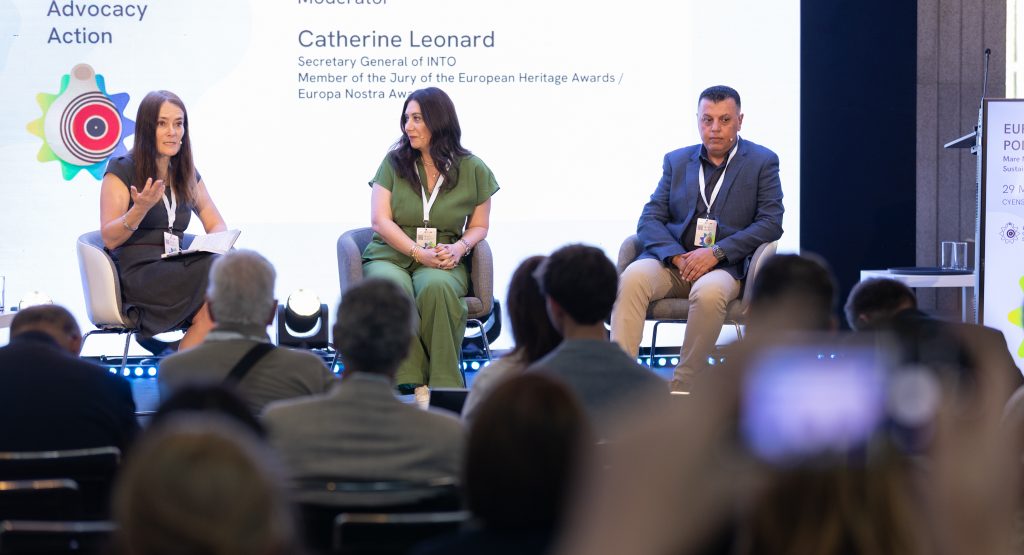
This spirit of exchange was very much in evidence at the Europa Nostra Summit in Nicosia, where I had the opportunity to lead a panel on the practical realities of adapting historic buildings to climate change. Drawing on our Withstanding Change project, Lama Aboud (Turathuna Foundation), Dr Abdelhamid Salah Al-Sharief (Egyptian Heritage Rescue Foundation) and Dr Dareen Al-Khoury (Petra National Trust) shared experience illustrating both the urgency of the challenge and the ingenuity of local responses. What made the discussion so powerful was its emphasis on practice. The same kind of grounded, peer-to-peer learning that sits at the heart of the Residency model.
The Summit was also a moment to celebrate Din l-Art Helwa, our Residency host, which received a European Heritage Award Grand Prix and marked its diamond anniversary last year. Its experience and proud volunteer tradition offer a powerful reminder that there is no single model. But what is at the heart of INTO is a strong set of shared values and a sense of belonging to a wider National Trust movement.
INTO members at the European Heritage Policy Agora 2026 - Mare Nostrum: Championing Environmental Sustainability through Heritage © Europa Nostra
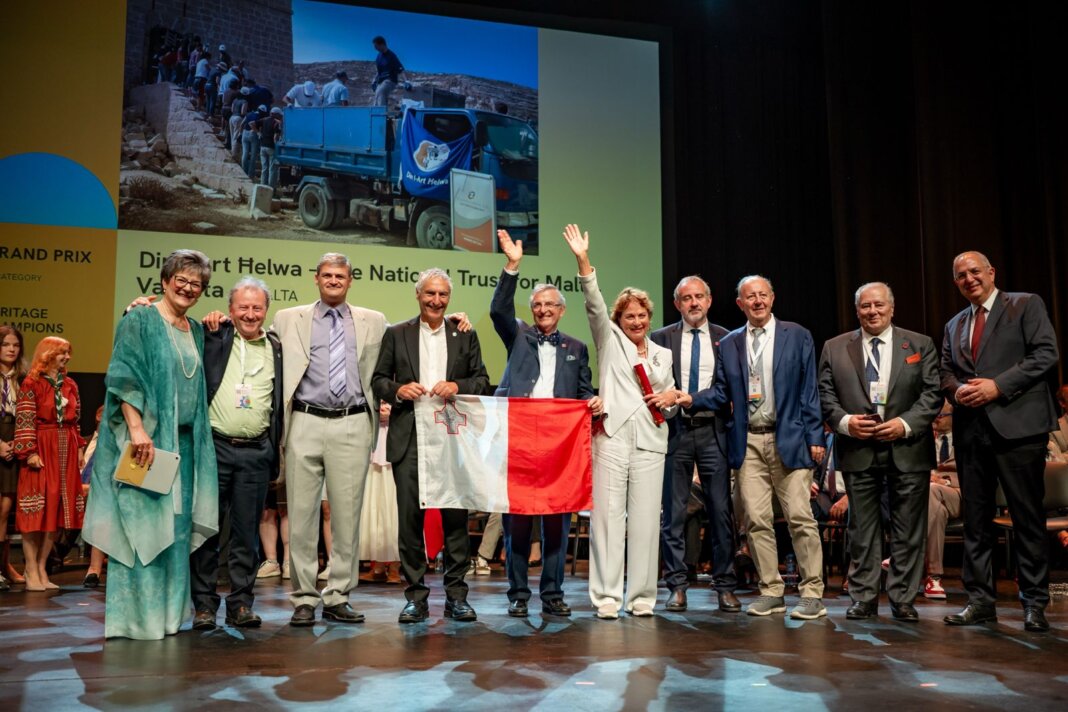
Din l'Art Helwa wins a Grand Prix in the ‘Heritage Champions’ category at the European Heritage Awards / Europa Nostra Awards 2026 © Europa Nostra
Who will save our heritage?
Then last week, I joined the Fondation du Patrimoine for its 30th anniversary celebrations in Versailles and took part in a panel discussion on a simple but profound question: Who will save our heritage?
The panel brought together representatives of the state, private owners and civil society. What was striking was how quickly we reached agreement. No single actor can do this alone. Protecting heritage requires collaboration across sectors, disciplines and borders.
Common threads, different patterns
Again, I was struck by how differently organisations can be structured while working towards the same goal. The Fondation du Patrimoine, founded partly with inspiration from the National Trust three decades ago, has evolved its own distinct model. Unlike the Trust, it does not own or directly manage most of the heritage it supports. Instead, it acts as a powerful enabler. It raised over €168 million in 2025 alone and has supported more than 46,000 projects, often focused on vernacular and everyday heritage.
The Pass Patrimoine initiative
This convenor role was on full display in Versailles with colleagues from across the sector present. But also with the launch of the Pass Patrimoine, a new initiative that feels closer to a membership model. For around €100 a year, people will be able to visit around 500 sites free of charge. And it’s something we’ve been talking to the Fondation about over the past year.
Mobilising a popular movement
What is compelling is both the scale of their activity and the clarity of its framing. The Fondation speaks unapologetically in terms of cause, describing its work as un soulèvement populaire, and is equally direct in how it mobilises philanthropic support. It offers a striking contrast to the National Trust model, which is rooted in ownership and prompts useful reflection on looking after heritage ‘beyond boundaries’.
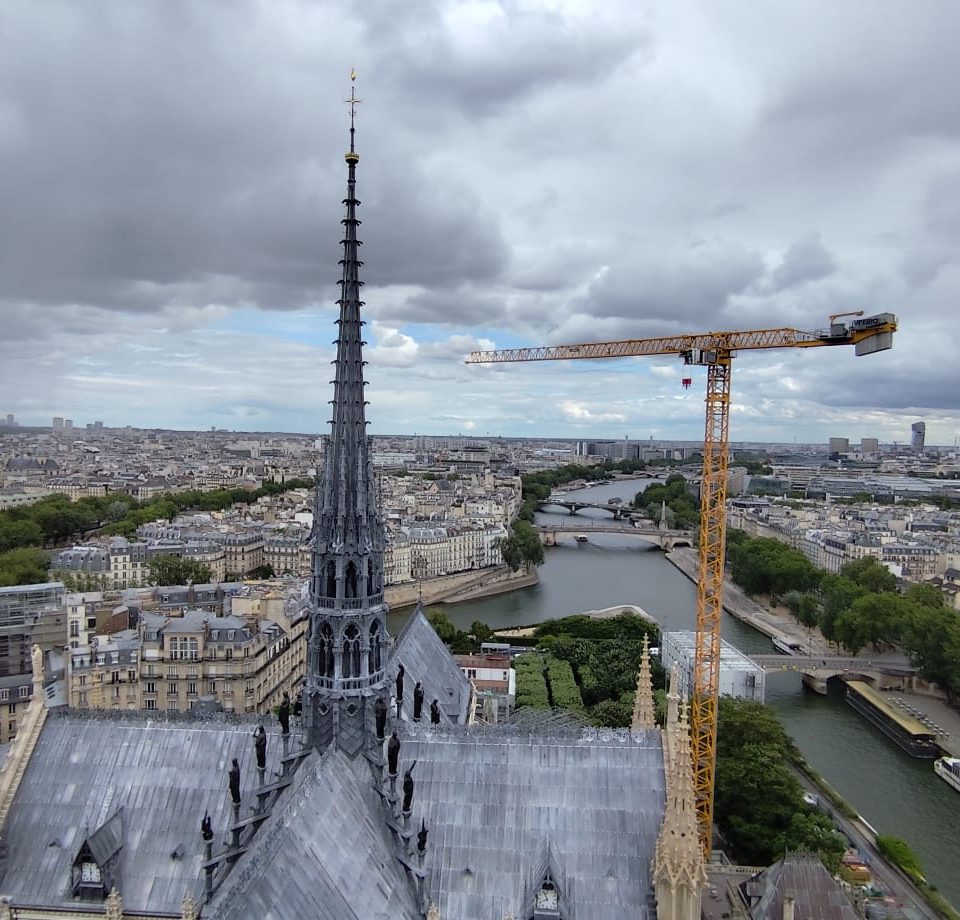
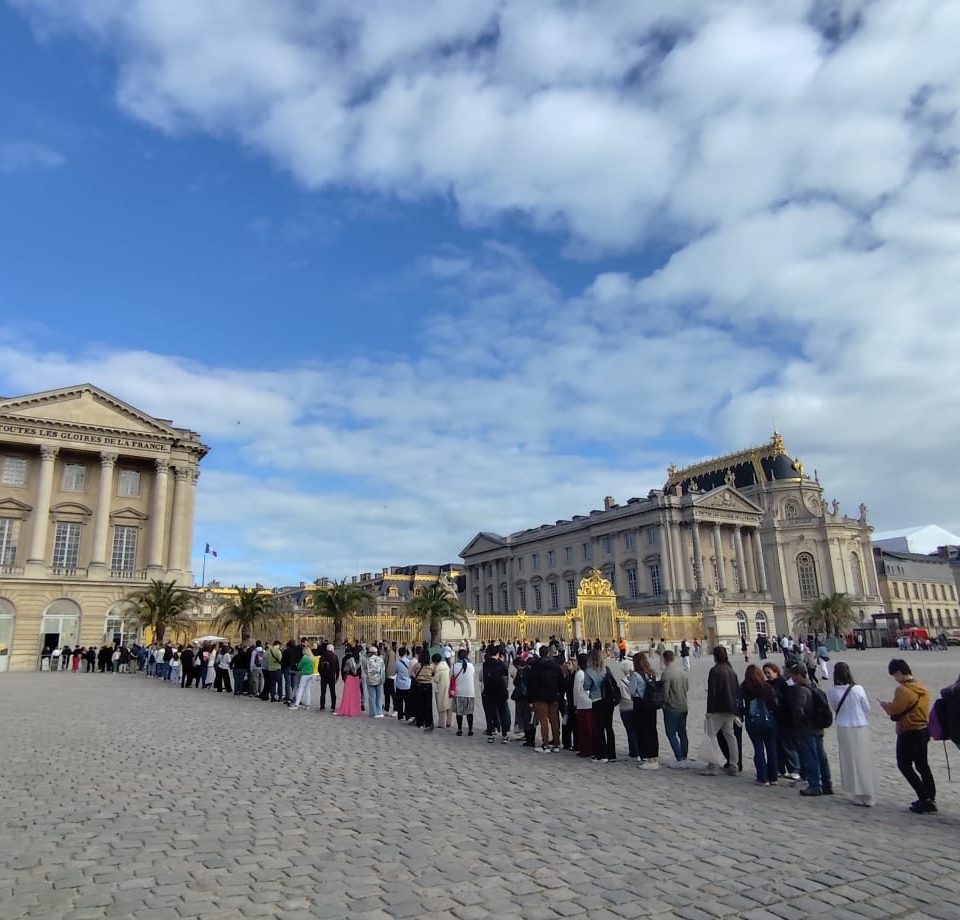
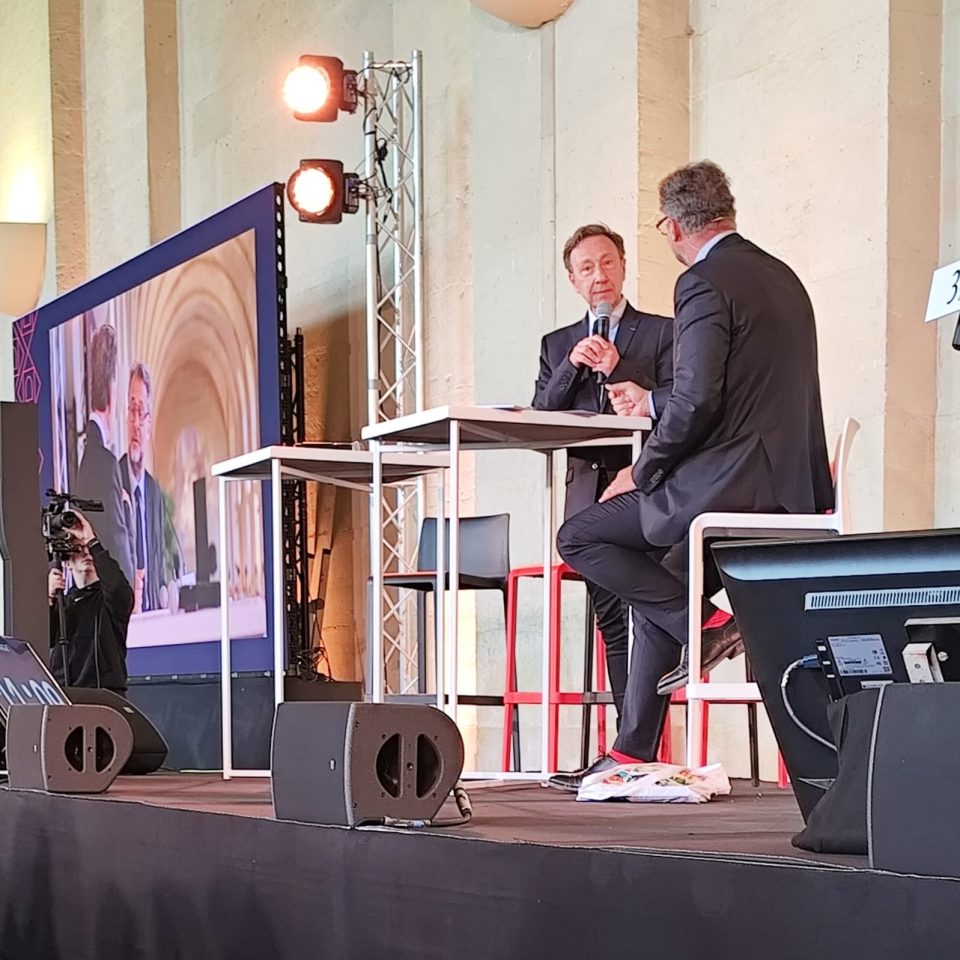
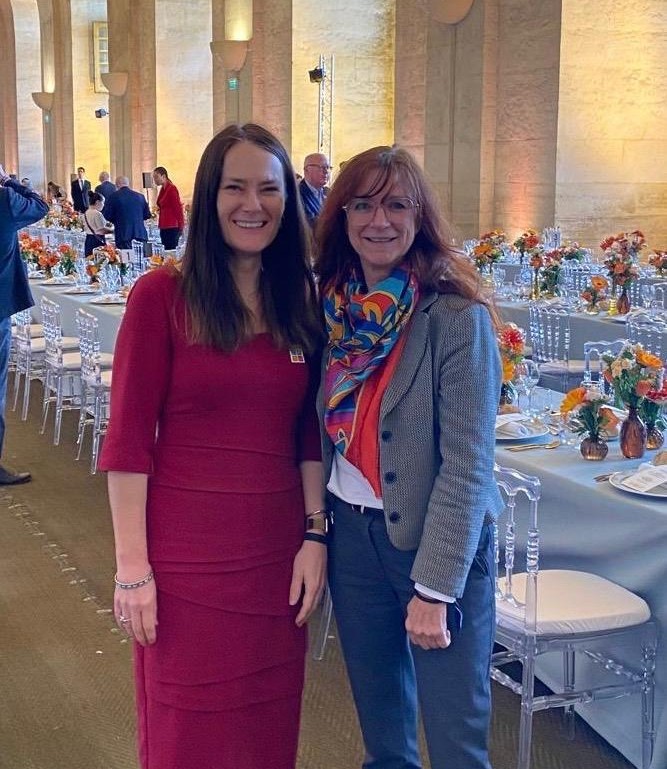
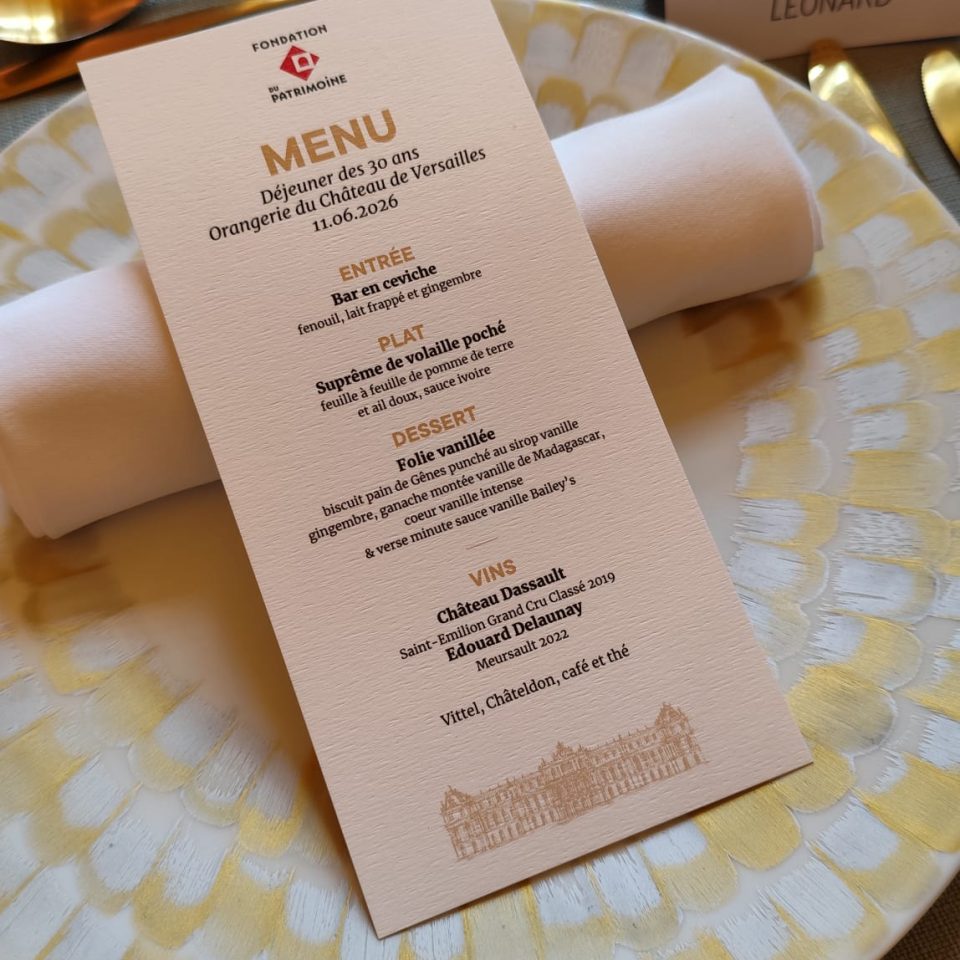
View from the Tours de Notre Dame - a property of the CMN; Visitors arriving at Versailles; Meeting Marie-Georges Pagel-Brousse, President of REMPART; Stéphane Bern addressing the conference
Across INTO, there is no single model. Some organisations raise private funds to restore publicly owned heritage. Others act as campaigning voices or fulfil quasi-regulatory roles in smaller countries. This diversity is a strength. Different contexts demand different approaches, but the shared ambition is consistent: to protect and pass on heritage, with and for people.
While in Paris, I also took the opportunity to reconnect with colleagues from REMPART and the Centre des Monuments Nationaux, even visiting the magnificent Tours de Notre Dame. Standing at the heart of such an iconic site, and seeing the extraordinary work that has gone into its restoration, reminded me what is possible when we work together for something we love.
Where does INTO fit in?
INTO brings together more than one hundred National Trusts and similar organisations around the world. Each is different but all are connected by a deep sense of shared purpose and belief in what a National Trust can be.
Our role is to create the conditions for that connection to flourish, supporting collaboration, sharing knowledge and helping a global movement of people and organisations stand up for nature, heritage and culture in different ways, in different places.
Case studies from our membership