BlogsClimate changeINTO Projects
Celebrating two World Heritage sites through ‘Salt and Stone’
September 21, 2026

A new blog by Simon Musasizi shows how once neglected and endangered by floods, the Kyiriba Kyathumba hot spring has been transformed into a bustling cultural hub, turning the tide of a community.
A green canopy of bamboo dotted with other trees, and chirping birds blending harmoniously with human voices and traditional melodies of the Bakonzo people welcomes you to Kyiriba Kyathumba hot springs. Further down on a well-paved walkway bathers are immersed in the soothing embrace of natural pools of warm mineral waters. Both men and women of all ages enjoy the hot springs; those with ailments in one pool and leisure visitors in another.
Situated in southwestern Uganda, in Kasese town, the hot springs are one of the country’s premier examples of a cultural heritage site that has united a local community to restore it, creating alternative livelihoods through sustainable tourism while protecting the ecosystem. This natural oasis is perfect for those looking to unwind, while indulging in the therapeutic benefits of hot springs.
Until 2021, the hot springs were not an attractive place, serving mainly as a cleansing space for a few people who sought its healing powers. Due to the effects of climate change, all the hot springs had silted.
‘It was all grey; no green cover, all the trees had been washed away and there was only one hot spring working,’ says Jonah Bazale, a neighbouring community member. ‘It was nearly a deserted place, with no organised management, attracting only a few visitors, who walked in and out without paying anything. It was also associated with criminality,’ he adds.
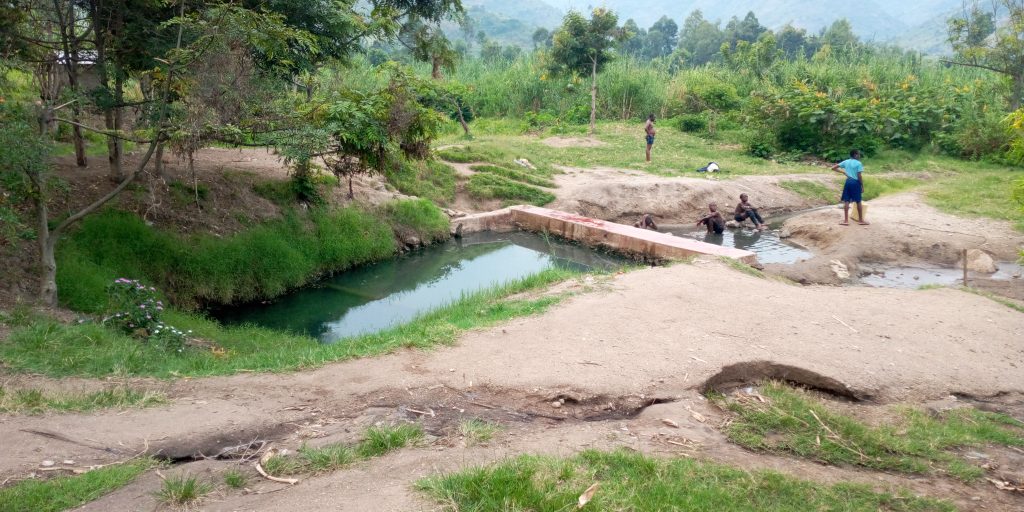
Kyiriba Kyathumba – Before the project intervention
 With ‘Melting snow and rivers in flood; mitigating the impact of a warming climate on Uganda’s heritage’ project, implemented by the Cross-Cultural Foundation of Uganda (CCFU) in partnership with INTO and with financial support from British Council’s Cultural Protection Fund (CPF) in 2021, the hot spring was among the cultural heritage sites documented as being under threat from the effects of climate change.
This raised awareness among the visitors and local community about the significance of the site. The community was supported to establish a site management committee, develop a management plan and implement some of their planned activities, including erecting an information board, desilting the hot springs and the Nyakabingo stream, and greening the space, including the planting of trees such as bamboo.
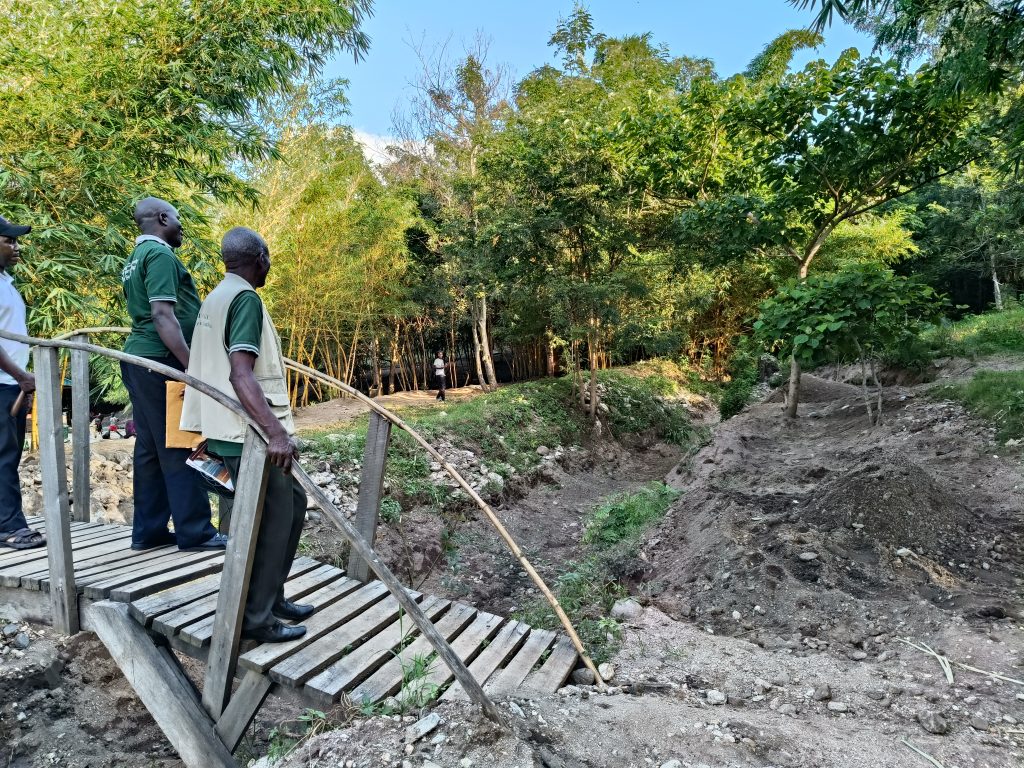
Kyriba Kyathumba site renewed
Eventually, the community was able to register as Kibbenge Community Model Tourist Village. They introduced a moderate entrance fee of 1,000 Ugandan Shillings, which the visitors pay to contribute to site maintenance. This enabled the site to employ staff, whose number now stand at 10 (security guards, cleaners and guides) and build sanitation facilities and changing rooms for visitors.
This resulted in visitor numbers growing from around 20 to 50 and now to 300 people per day, with a daily income of between 180,000 to 200,000 Ugandan Shillings. In December 2024, as part of their self-help initiatives, the community started started a Savings and Credit Cooperative Organisation (SACCO) and has been able to save up to 13,000,000 Ugandan shillings, which they recently used to purchase a plot of land in the village to establish a health centre.
According to Farouk Baluku Bobo, the association chairperson, the health centre offers services to the local community and visitors who come with different illnesses. At the moment, the site has a first aid station that offers initial treatment for malaria since the wetland is a breeding area for mosquitoes but also helps patients to measure their blood pressure.
The association, which comprises of 420 members (220 women and 200 men), also gives back to the community through a monthly package to the elderly consisting of home items: sugar, soap and rice. They support young people in their community by partly meeting their education needs, such as paying for examination registration for candidates and buying scholastic materials.
This site has given people new opportunities to earn a living and build a better future for the community
Kyiriba Kyathumba is a Lukhonzo term meaning a hot spring. It is derived from two words: Kyiriba meaning a pond or pool of water and Kyathumba meaning boiling and evaporating. Located at the foot of the Rwenzori Mountains, a UNESCO world heritage site, most visitors, according to the site’s tour guide Abbas Bwambale, wonder how a volcanic feature such as a hot spring can occur at the foot of a block mountain, which was formed through faulting. What happened, according to Bwambale, is that during the geographical formation of Mt. Rwenzori, some soils were moved. The local community, on the other hand, believes the hot springs were created by God to cure various ailments.
The hot springs are reported to have been discovered in 1950 by a traditional doctor called Musaki. He used to treat diseases such as German measles (sometimes known as Rubella), which had caused increased infant mortality rates.
‘It is believed that there were no vaccines to immunize the children at the time. The locals attributed the cause of the disease to witchcraft. The traditional healer took advantage of that. He would bring people to the spring and smear them with mud. He would keep the patient at the site for close to seven days,’ Bwambale narrates. ‘The area was then hit by a strong drought that affected farming activities in the area. Since drought was associated with witch doctors, he was arrested by the ridge leaders and village chiefs.’
After his disappearance, the springs were left without a caretaker. It was an abandoned site that the locals feared to associate with because it was dotted with shrines. It was not until the 1970s that people from other areas started visiting the springs. These were workers of Kilembe Mines.
Because of their richness in minerals, the hot springs are understood to play an important role in healing. These are mainly skeletal and muscular disorders: fractures, sprains, dislocations, bone deformations and bone softness. Additionally, metabolic diseases are also believed to be healed by the hot springs.
The people who come to soak in the hot spring refer to themselves as patients, although there is no doctor to diagnose the nature of their diseases, and the stories surrounding the healing powers of the hot springs have not been scientifically proven.
20-year-old Betty Kabugho sells fruits at the site. She says that the site has provided her with a source of livelihood, since on a good day she is able to sell fruits worth between 50,000 and 70,000 Ugandan shillings.
Similarly, Ann Nyamusana Anifa, whose business, Western Valley Institute Kasese (a training institute in catering and hotel management) closed due to Covid-19, has found a new lease of life selling juice, tea and snacks at the site.
‘Patients come with caretakers who want to eat and drink, so this space provides an opportunity to earn,’ Ann says.
According to Geoffrey Kabyanga, the association Secretary for Welfare, the site currently indirectly employs 20 people, including food vendors and massage therapists. There has been a broader economic impact on the village; two community guesthouses have opened, and the site is now connected to hydroelectricity ensuring good lighting for the visitors. CCTV cameras and a TV area have also been installed to further improve the visitors’ experience, especially those who come for relaxation.
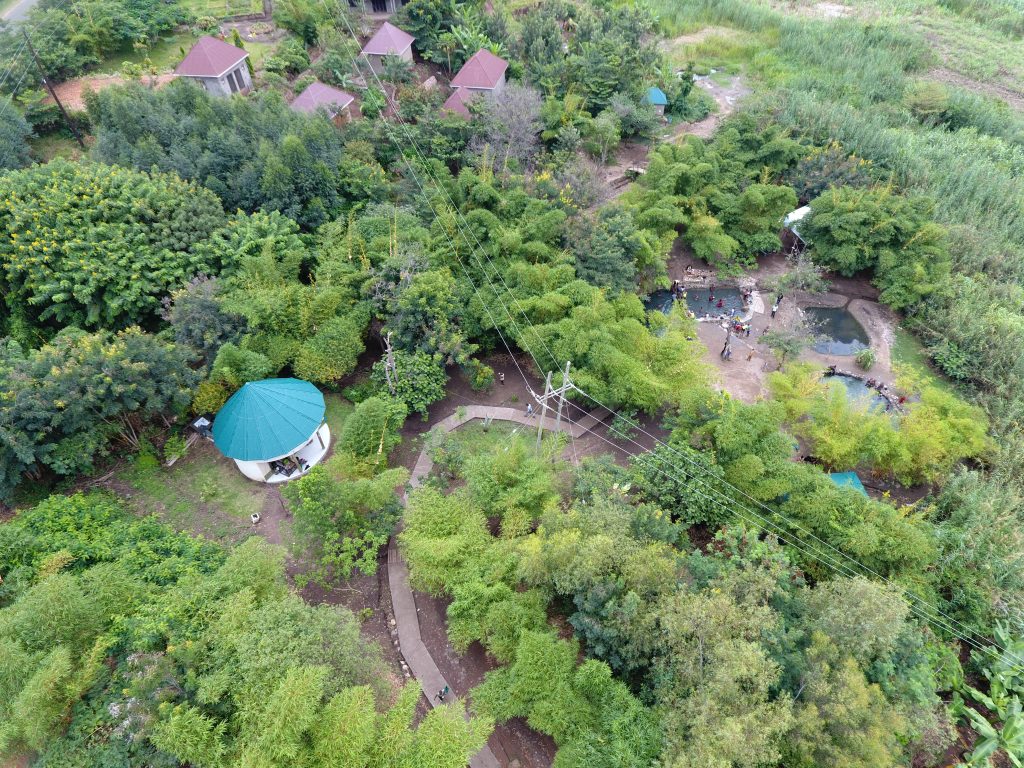
An aerial view of the hot springs site with lush green vegetation
It was all grey; no green cover, all the trees had been washed away and there was only one hot spring working. Today, the site is thriving again.
Five years on from the ‘Melting Snow and Rivers in Flood’ project, Kyiriba Kyathumba demonstrates that climate adaptation and heritage conservation can achieve far more than protecting a cultural site.
What was once a flood-damaged and largely abandoned hot spring has become a thriving community asset, creating jobs, supporting local businesses, funding social initiatives and attracting hundreds of visitors each day. Most importantly, the transformation has been led by the community itself.
For INTO members, the story of Kyiriba Kyathumba is a powerful reminder that when local people are empowered to care for their heritage, conservation can become a catalyst for economic opportunity, community wellbeing and long-term resilience.
September 21, 2026
July 13, 2026