BlogsProgrammesTAP INTO
Inspiration, Ideas and Action: Reflections from a visit to the National Trust of Zimbabwe
July 28, 2026

INTO’s community of practice for Tropical Gardens knowledge exchange recently met in person, thanks to a matrix of TAP INTO grant-funded meetings. This blog from Somil Daga, curator of the gardens of Mehrangarh Fort and Soham Kacker, curator of Lunaganga, shares learnings from Sri Lanka and India.
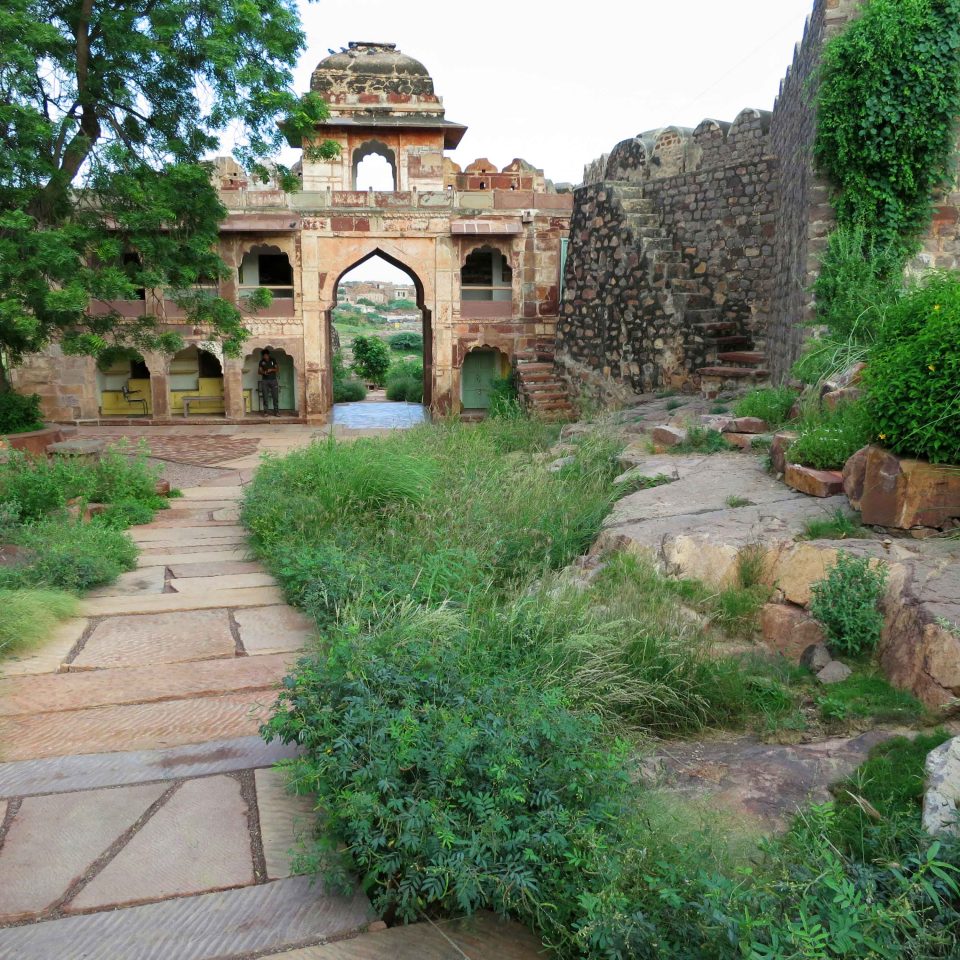
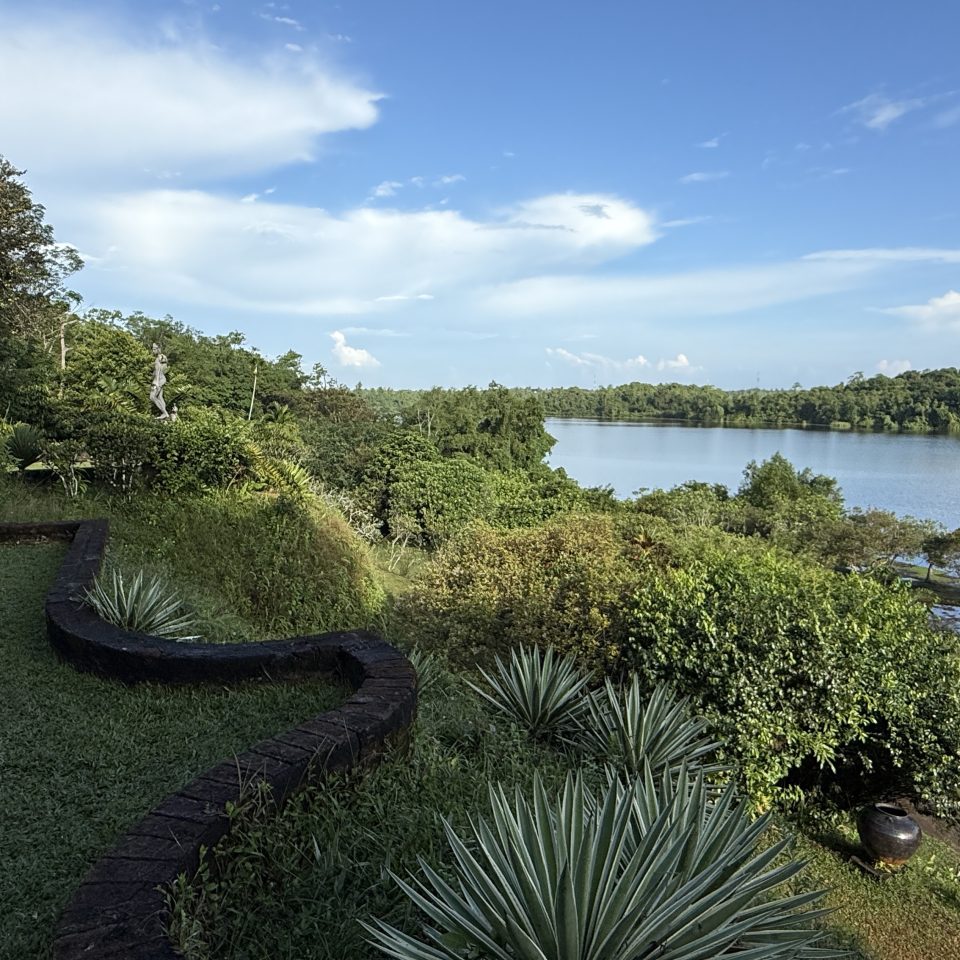
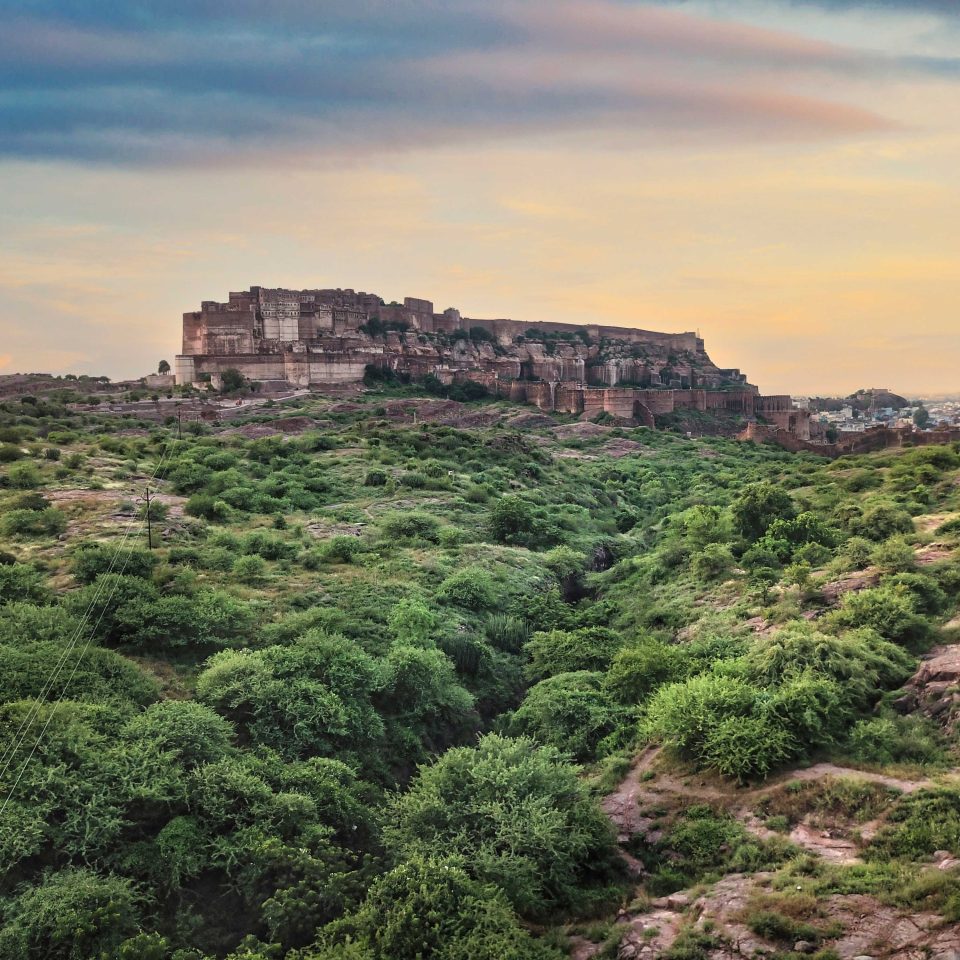
I (Somil) became a plant person not too long ago, and for the most part of my short gardening career, I’ve been looking after a landscape that, to many people, doesn’t really look like a garden (and I don’t blame them!). At Rao Jodha Desert Rock Park (RJP) in the desert city of Jodhpur, and the Abha Mahal Bagh at Ahicchatragarh Fort in Nagaur, my days revolve around rocky hillsides, hardy native shrubs and grasses, and the slow, patient work of restoring desert ecosystems. So when I was invited to spend two days at Lunuganga, Geoffrey Bawa’s lush tropical garden in Sri Lanka, it felt like stepping into an entirely different world!
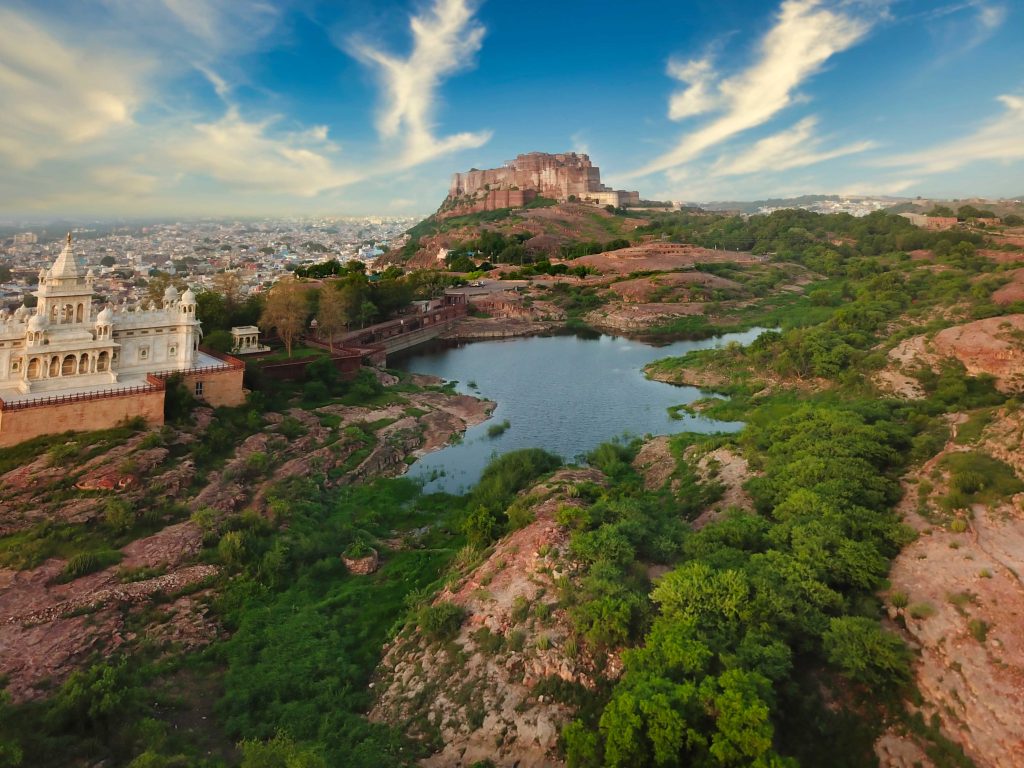
Devkund Lake with the Mehrangarh Fort and Jaswant Thada memorial
At first glance, it was hard to imagine two gardens with less in common. One is hot, dry and rugged; the other is green, lush and humid. Yet beneath these obvious differences, there were similarities. I was (pleasantly) shocked, for instance, when Soham told me that they do not water the gardens at Lunuganga (we do not water anything in RJP either!).
We soon realized that we were both asking similar questions: what does it mean to care for a landscape that is also a heritage site? How do you preserve its original character while allowing space for it to evolve? How far away can one go from its original character to embrace this? How do you balance history, ecology, visitors and the practical realities of maintaining a living landscape?
The exchange gave us the chance to trade ideas and stories, compare our approaches, at times even question long-held assumptions, and occasionally just wander leisurely through the gardens. I have also felt alone at times in my work, trying to stand for the importance of dry, ‘open’, savannah ecosystems in a world that is heavily biased towards forests, but to spend two days with Soham at Lunuganga, sharing our passion about local, native ecosystems, was delightful and wholesome in the most unexpected ways.
So, here are the five key learnings from our exchange.
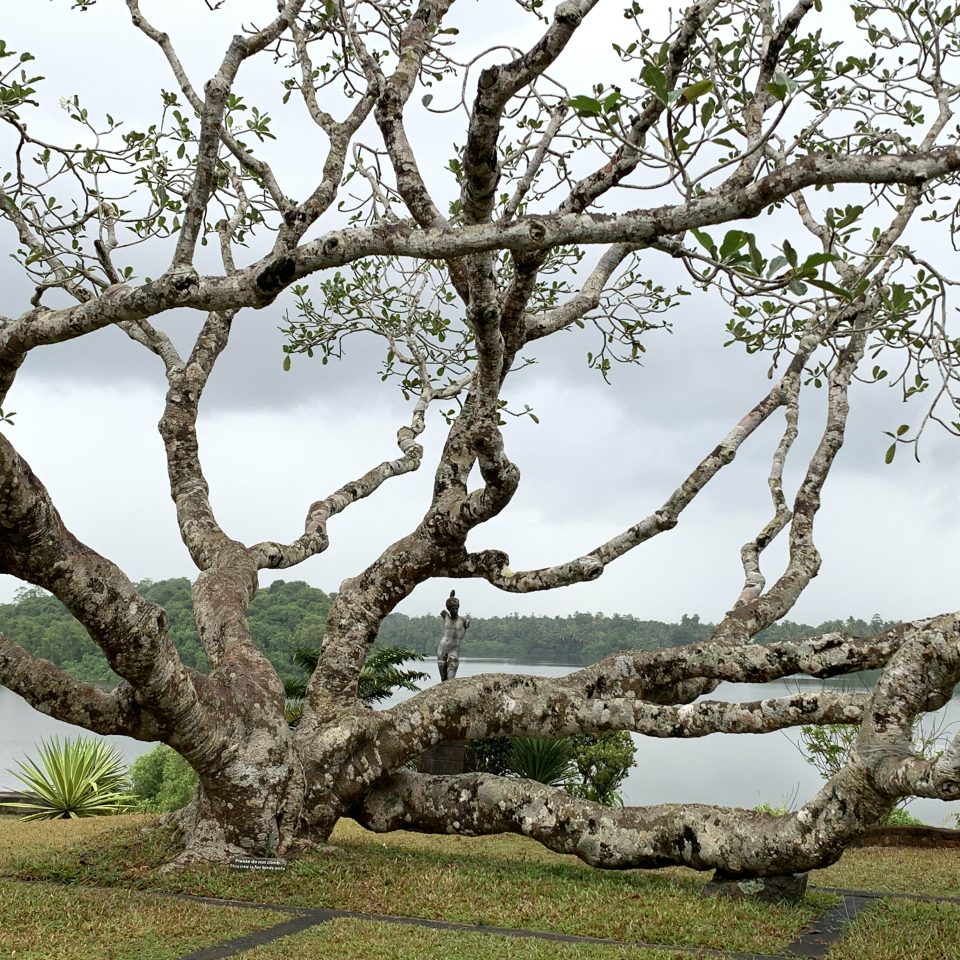
We discussed how restoration at Lunuganga is dictated largely by the baseline state of the garden at the time of Bawa’s passing. Any preventive and restorative interventions depend on the ability of gardeners and curators to reconstruct that baseline using archival materials such as images and correspondence, botanical indicators, and collective memory. While this provides an effective rubric for conservation, it does not always account for changes which may become necessary due to the garden’s evolving use, and widespread climatic changes.
In contrast, the garden at Abha Mahal is redefining what it means to restore a heritage garden. Abha Mahal Bagh is quadrat-style, formal garden inside a 12th century fort. Instead of recreating what the garden would have looked like in its original form, the formal garden was planted up with native, wild species that belong to that region. It demonstrates how heritage spaces can be restored using an entirely new palette of plants, while faithfully preserving architectural elements and ground plans.
The plants chosen at Abha Mahal reflect the indigenous flora of its context, and create a climate-resilient garden which is engaging and informative for visitors. In the case of both gardens, our experience shows that restoring a garden may not always mean a linear return to a historical baseline, as gardens by nature are dynamic and must adapt to current challenges and pressures.
Although the Rao Jodha Park and Lunuganga are landscapes of vastly differing scale, both gardens contribute to locally conserving biodiversity. At Rao Jodha, an extensive and long-term landscape restoration project focused on the removal of the invasive Prosopis juliflora tree, and the reintroduction of indigenous plant communities in the landscape around the Mehrangarh Fort. Beyond enhancing the landscape around the fort, this led to the creation of extensive knowledge about the ecology, propagation and cultivation of indigenous plant species.
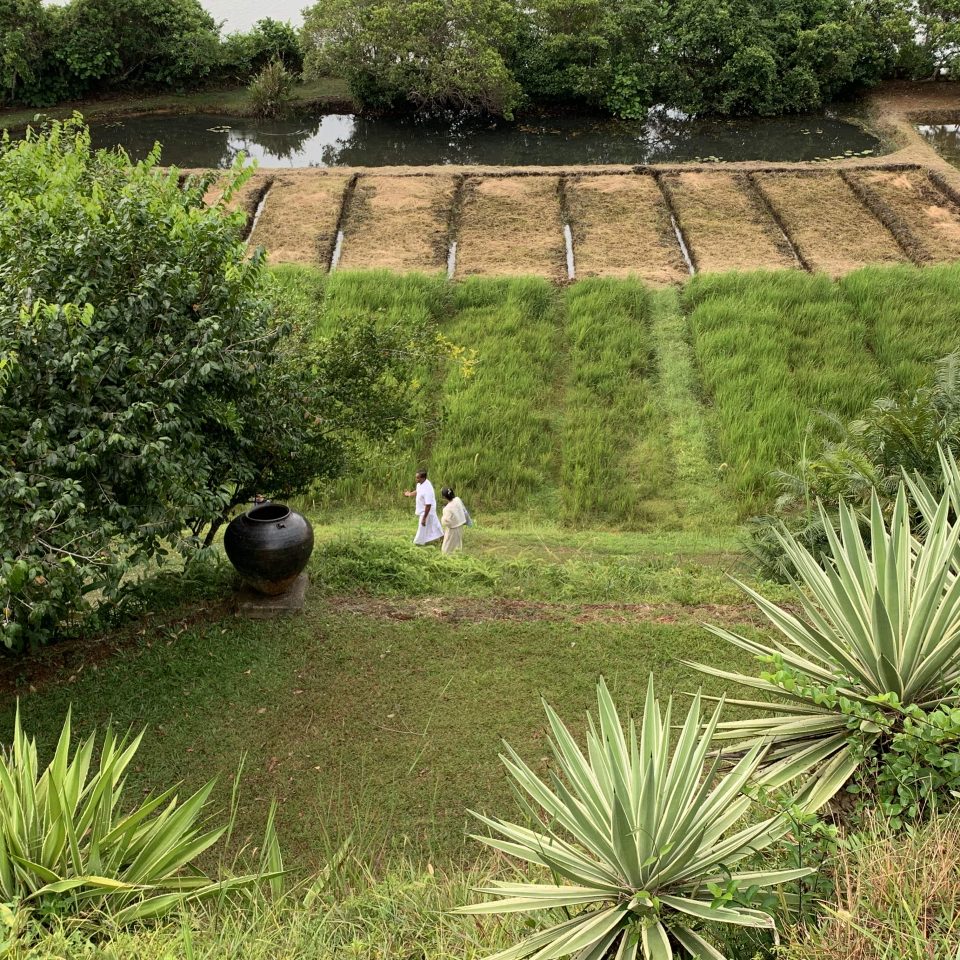
At Lunuganga, interventions on a smaller scale include the gradual replacement of invasive species in the garden with indigenous ones, and the use of ecological gardening practices such as natural mulching, retaining deadwood where safe and feasible, and provisioning for low-light and sound in the garden after dark. In biodiverse areas, these measures make a significant difference to the ecological communities surrounding the gardens.
We quickly realized that we had both been grappling with the idea of climate adaptability of heritage gardens – in terms of evolving management, but also planting. RJP is a pioneering example of how a heritage site can include indigenous species that are adapted to local soils and climate, require no irrigation, withstand extreme weather, and support wildlife.
RJP works with the principle that working with native species holds the key in climate adaptability of gardens. Nothing is watered in the dry, desert garden of RJP!
At Lunuganga too, there is a growing effort to gradually replace invasive species with indigenous ones that are better suited to the local ecology, in a way that retains the original design of the garden. While the approaches differ slightly, both gardens demonstrate that embracing native plants can strengthen climate resilience while reinforcing the unique ecological identity of a heritage landscape.
We both also discussed the complete lack of availability of native plant material in our local nurseries, and the urgent need to start a network of native plant nurseries. After all, how will gardens become climate resilient if indigenous plant materials are not available?
Heritage gardens today cannot just be places that evoke a sense of the past; they must adapt and become relevant for today – gathering spaces where people learn, connect, and develop a sense of stewardship. During our discussions, we found a shared interest in engaging audiences beyond traditional visitors, particularly children and young people.
At RJP, educational walks, workshops, and hands-on activities are showing that early experiences in nature can foster a lasting appreciation for both biodiversity and cultural heritage. Children are enthusiastic ambassadors and they carry stories and discoveries back to their families and extend the garden’s reach to new audiences.
Lunuganga is exploring how similar approaches could be adapted to its own context, creating opportunities for visitors to engage more deeply with the landscape. By becoming spaces for environmental and heritage education, rather than simply destinations to visit, tropical heritage gardens can remain meaningful, inspire future custodians, and build broader public support for their long-term conservation.
We both felt that in South Asia, horticulture is not viewed as a viable career path, and that heritage gardens can lead in changing this perception. Heritage gardens in this region must invest in developing foundational skills and resources through training programmes, apprenticeships, and volunteering opportunities.
Given the specialist skills required to manage and operate such landscapes, these initiatives are crucial to produce the next generation of gardeners, directors, and curators who can ensure the long-term preservation of these gardens.
Soham – Having Somil visit Lunuganga resulted in two days of deep and wide-ranging conversations which highlighted that despite the apparent differences between our two gardens, we still had many shared experiences.
Gardens in the tropics must preserve their heritage essence, but remain changeable in order to adapt to current use-patterns and environmental challenges. While we found commonality over direct action points – gardening ecologically, controlling invasive species, setting up in-house nurseries, reaching out to communities and engaging visitors, certain systemic uncertainties remained.
We discussed how institutional priorities favour built over natural heritage, how access to specialist skills and resources needs to be streamlined, and how conservation guidance needs to be tailored to tropical contexts. We hope that future exchanges of knowledge and resources through the INTO Community of Practice on Tropical Gardens will help address some of these challenges, and help our gardens flourish in the future!
July 28, 2026