BlogsCase StudiesProgrammes
Building stronger heritage organisations through collaboration
September 30, 2026

For International Women’s Day 2026, we’re celebrating the power of women who rebuild not only places, but also possibilities.
This spirit aligns powerfully with this year’s International Women’s Day theme, ‘Give to Gain’ – a call to create progress through generosity, shared knowledge and mutual support.
This article is also available in Arabic.
هذه المقالة متوفرة أيضاً باللغة العربية
In the Old City of Homs, where conflict once fractured communities and silenced cultural spaces, a new kind of recovery is taking root. The Turathuna Foundation – INTO’s member in Syria – has been using cultural heritage as a powerful tool for healing, learning and rebuilding.
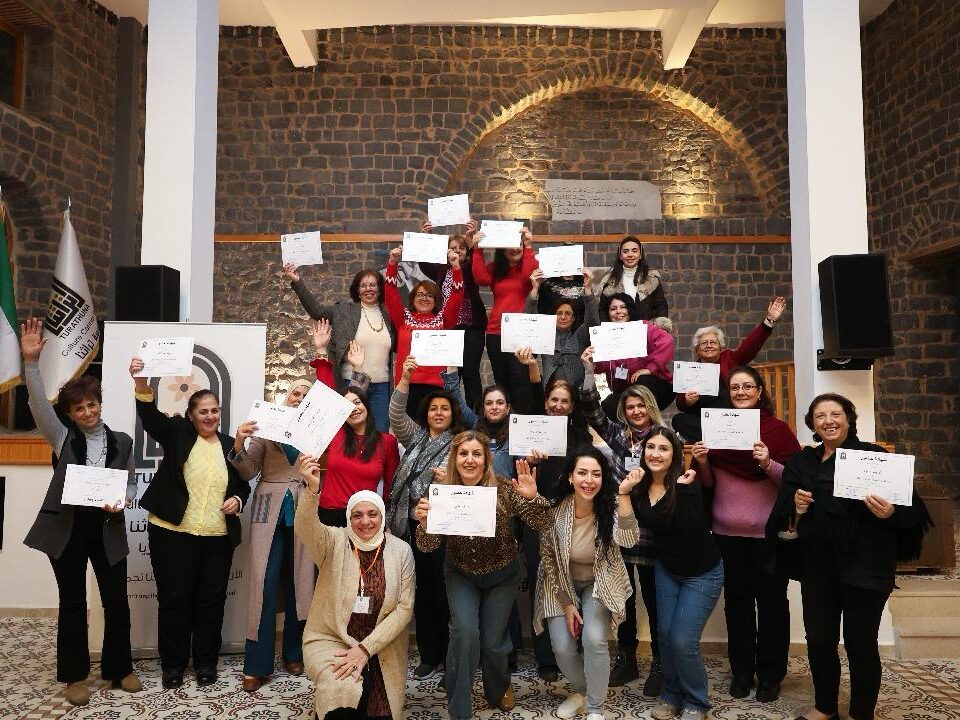
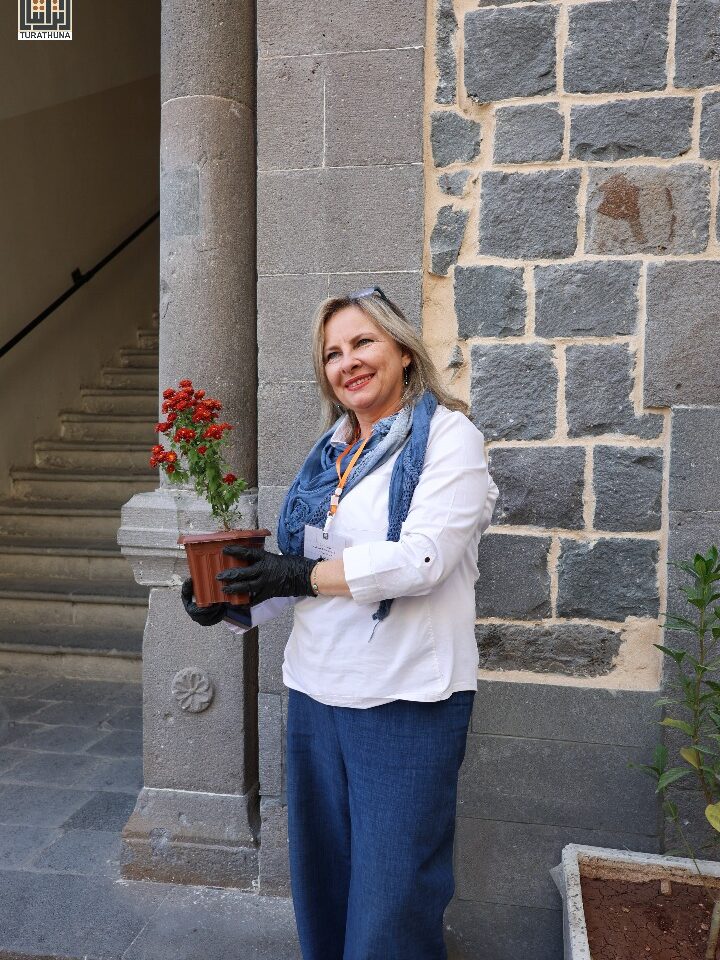
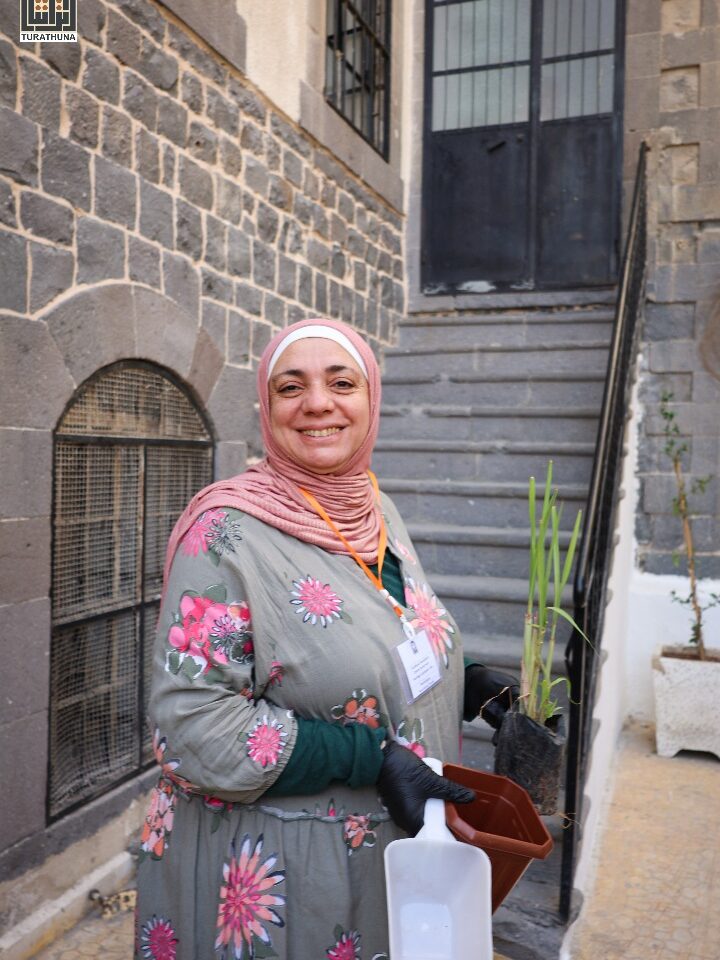
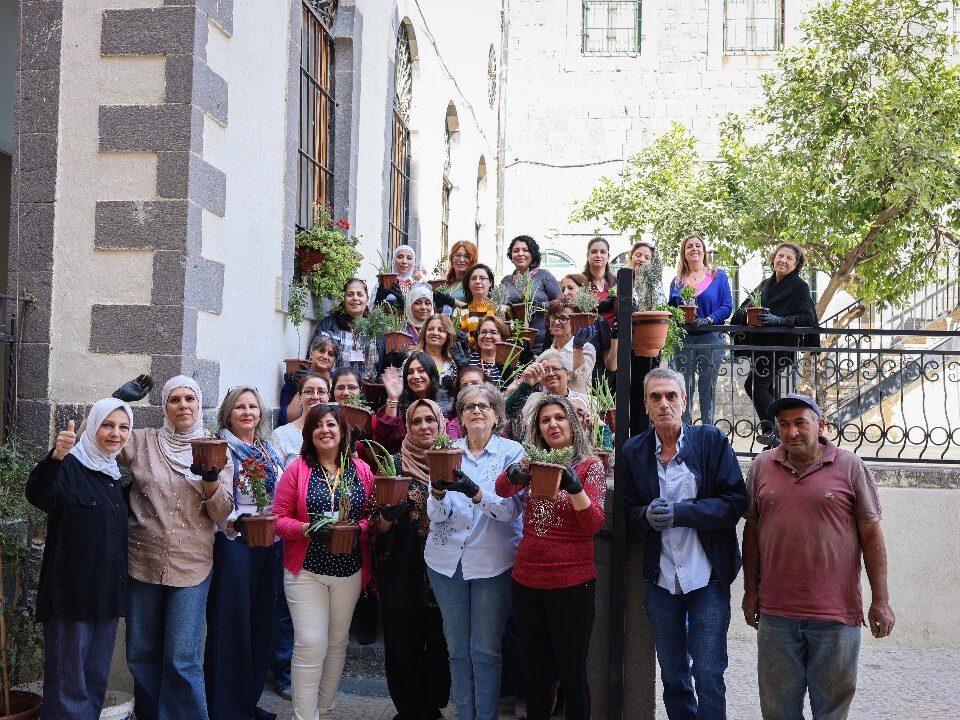
One of the most transformative initiatives was the 12‑day ‘Heritage Project Management for Women’ course, held in October and November 2025. It brought together 28 women from across Homs, each carrying different life experiences, faiths, ages, skills and aspirations – a true reflection of the city’s diversity.
What united them was a shared desire to rebuild: themselves, their community, and the cultural heritage that anchors both.
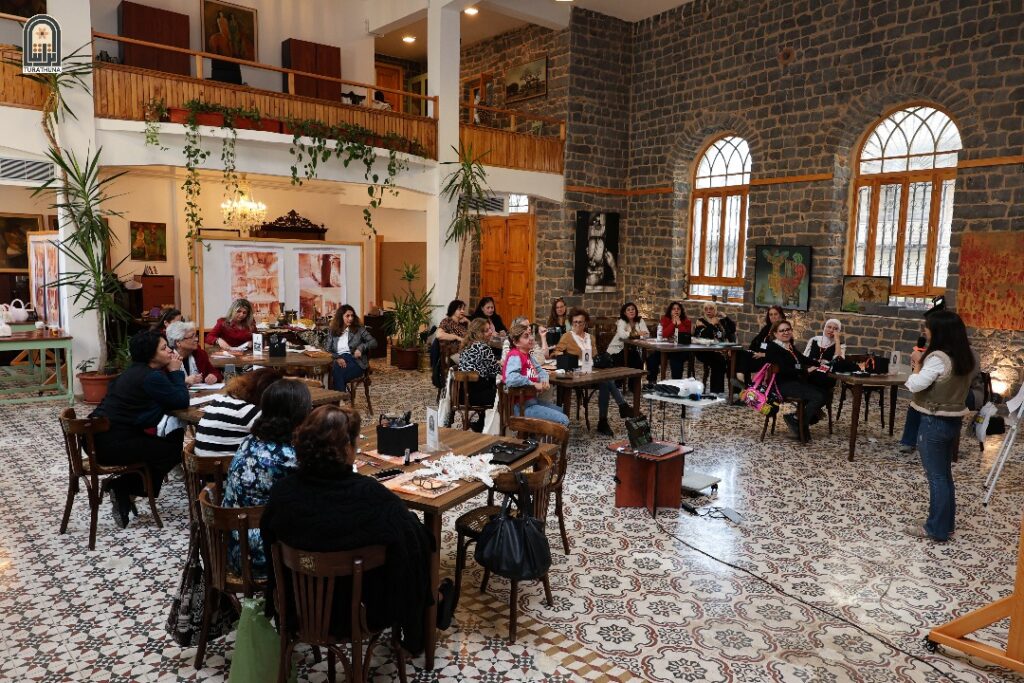
The programme explored the deep connections between climate change, cultural heritage, and community resilience. The group learned about the history of Homs, environmental stewardship, climate challenges and entrepreneurship – alongside themes of peacebuilding and psychosocial support.
The restored Ghassania Theatre became both a classroom and a symbol. Rising from the rubble, it showed what was possible.
‘By knowing our heritage and recovering it, we recover ourselves,’
– Lama Abboud, Turathuna
This message resonated deeply, especially as the women explored churches, mosques, heritage houses and city landmarks, learning how intertwined their community’s stories truly are. They shared accounts of Muslim worshippers praying in churches during crises, and of centuries‑old interfaith coexistence – living reminders that heritage in Homs has always been a shared inheritance.
By knowing our heritage and recovering it, we recover ourselves
A powerful session on ‘psychological pressures, conflict resolution and peacebuilding’ revealed the emotional landscape the women carried with them. Their testimonies illustrated the weight of Syria’s recent history – but also the extraordinary resilience shaped by it.
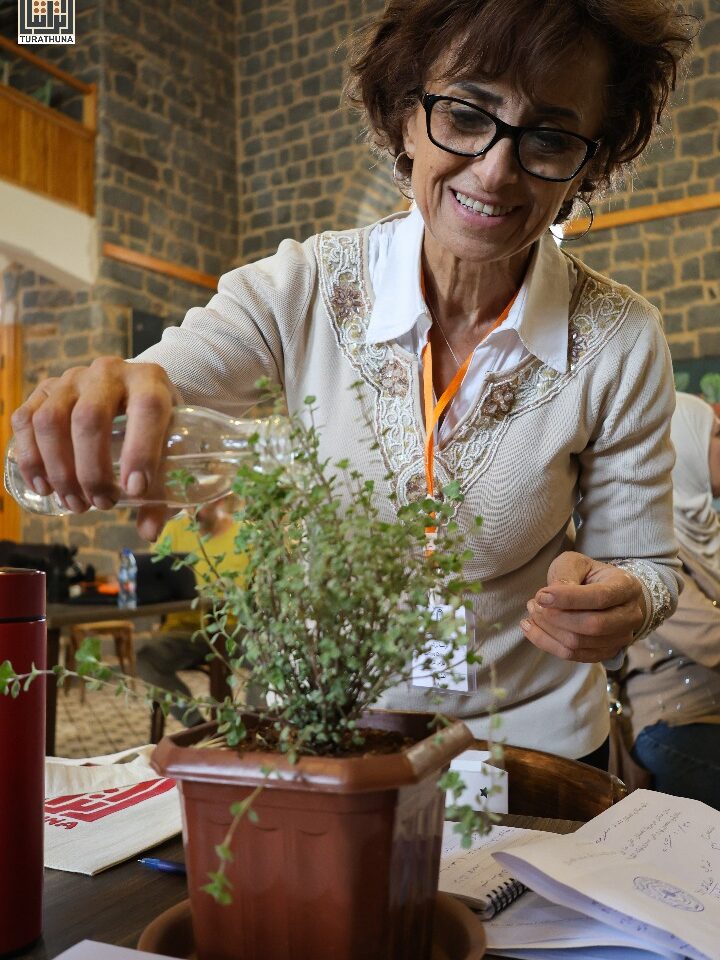
One woman recounted losing her home, and the kidnapping of her husband and son. Yet, returning to what remained of her home, she created a plant nursery – a green refuge in the shadow of loss, and a lifeline that allowed her family to survive. Her story opened space for others to share their own burdens.
Another woman described caring for a seriously ill husband while navigating her own longing for stability, independence and a future of her own making.
These deeply human exchanges became moments of collective healing.
‘I realised my suffering was not mine alone. When I spoke, the others held my story with me – and it gave me strength again.’
– participant quote
The group discovered that shared pain could become a foundation for solidarity. And solidarity, in turn, can become the basis of community cohesion – something essential in a post‑conflict landscape.
I realised my suffering was not mine alone. When I spoke, the others held my story with me - and it gave me strength again
As the days progressed, personal narratives began blending with cultural reflection. The group spoke about traditional crafts their mothers had taught them, agricultural practices from their childhoods, and memories of artisanal trades now endangered.
Heritage became a bridge – linking their stories and offering a shared sense of belonging.
Heritage walks extended this connection into the city streets. Visiting old markets, religious landmarks and historic alleyways, the women saw not only what had been lost, but also what could be reclaimed. These walks reinforced that cultural heritage is not static or distant – it lives through the people who protect it.
Building futures: skills for livelihood and leadership
Alongside emotional resilience and cultural learning, the course equipped the women with practical tools in entrepreneurship, financial management and small‑business planning. They assessed feasibility and explored new income opportunities grounded in heritage and sustainability.
‘Heritage is not only memory – it can be a livelihood,’
– course participant quote
By the final sessions, each participant had developed a project idea, many inspired by climate‑aware or craft‑based concepts. Their work was later showcased at the Tales of the Place bazaar – their first opportunity to present heritage‑based products to the public.
Heritage is not only memory - it can be a livelihood
Through shared stories, cultural exploration, climate learning and community dialogue, the women discovered that they were not alone – that rebuilding, like heritage, is a collective act.
The course highlighted that:
The 28 women who joined this journey left with new skills, new networks and new confidence. But more importantly, they left knowing that the revival of Homs – its environment, its heritage, its spirit – begins with them.
Restoring heritage means restoring people - and women are at the heart of that renewal
September 30, 2026
September 21, 2026

September 11, 2026